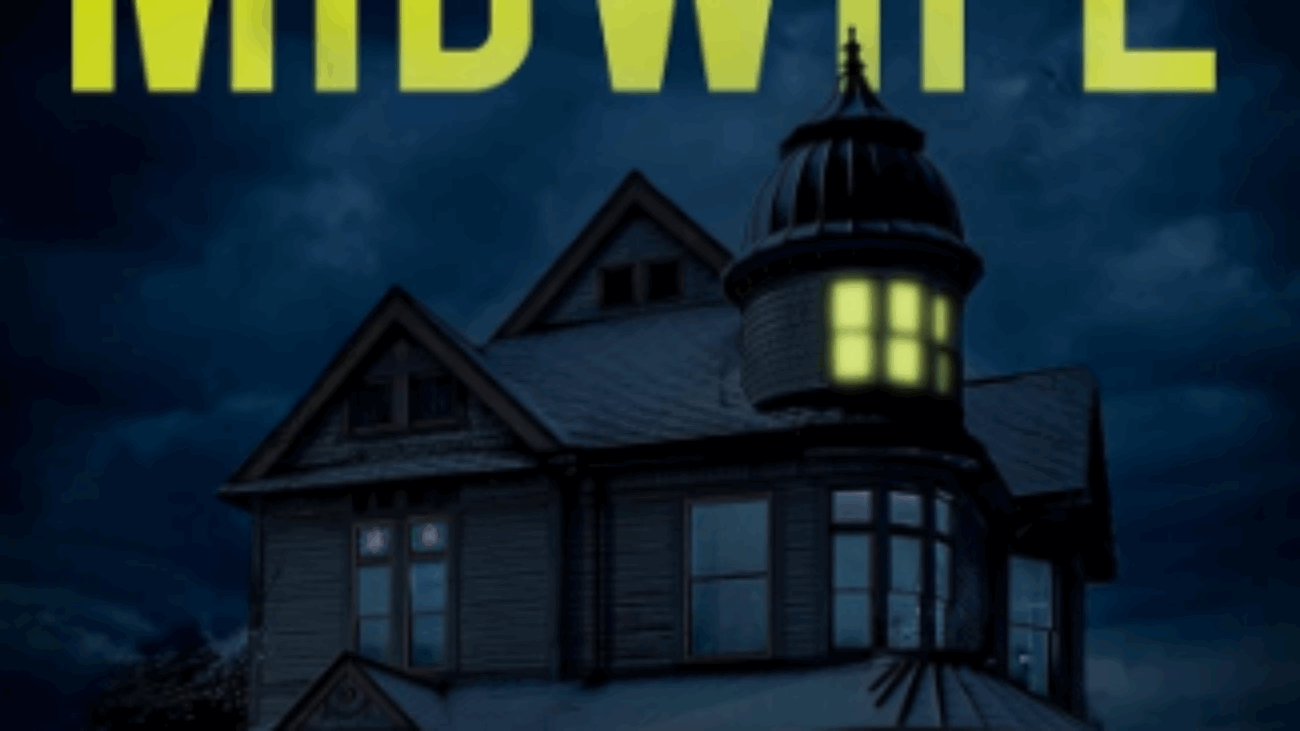
Third Place:  The Third Estate by D.R. Berlin

The Third Estate: Secrets of the Manor by D.R. Berlin

Reviewed by Ephantus Gold

“The Third Estate: Secrets of the Manor” by D. R. Berlin is a gripping tale that parallels two story lines that at first seem worlds apart, but then chillingly begin to converge, creating a psychological thriller wrapped in the moral ambiguity of espionage and family secrets.  Purchase Here.

The story begins with Kai Lovac, a cold, meticulous, and hyper-professional assassin, who finds himself on a mission that doesn’t make sense to him. He feels paralyzed with dread and indecision as he recalls the events of the day – complications, delays, and awkward interactions that plagued his every move. The thoughts paralyze him with doubt, unraveling years of trained detachment. Still, duty prevails, pushing him to the execution even as he gets haunted by the suspicion that he may have just pulled the trigger on someone who may not have been a stranger at all.

Twelve years later, the story introduces Cadet Sophie Allard, who has invested the last four grueling years in intensive studying, muscle-aching physical training, and mental conditioning to earn her position as a fighter pilot. Things, however, take a new turn when she is made aware of an explosion at the lab at Grand Lake Manor, where her father, Professor Anderson, works. Many believe that he was the only one working at the time of the explosion and thus may have been the only casualty. Sophie hates it when people refer to him as her father- he never wanted to be a father to her and had instructed her always to call him “the Professor.” “I was a nuisance to him, nothing more…” These bitter words set the stage for a story charged with emotional tension and hidden family truths.

This story takes a sharp twist with the entrance of a figure, not a stranger, but a ghost from the deepest corners of Sophie’s past. It brings with it memories of a scar-faced man who murdered her adoptive mother, secrets of organizations operating in the shadows of government, a life’s work so dangerous that they had to hide it, and of a threat that never truly left the family. At this point, Sophie finds herself thrust into a battle for survival and forced to use every ounce of her elite military training not in the skies, but in the very place she once called home.

This story deftly confronts the nature of truth and deception through its well-hewn characters whose flaws and decisions blur the line between loyalty and betrayal. Each holds a mirror of what truth really is, according to them, as well as how it can be weaponized or twisted into motive, shield, or trap. The novel employs a dual timeline structure, which builds momentum through contrast and cliffhangers that mimic the rhythm of a cinematic thriller. It also uses a cause-and-effect design as well as short declarative sentences that heighten tension and mirror the characters’ sense of control.

I appreciated how Berlin’s writing style adapts to capture the emotion of the moment. The short, sharp dialogue makes the scene feel urgent and real, while the quick, active words show the protagonist’s determination. You can really feel the tension between following orders and following her own conscience. Berlin’s short, clipped sentences, such as “Still behind schedule. Not acceptable,” and “No more delays. Still behind schedule. Not acceptable,” make the moments feel fast and intense. Her writing style matches the well-drawn antagonist’s strict and focused mindset, while the quick rhythm of her words makes you feel his pressure and drive, pulling you right into his world.

“The Third Estate: Secrets of the Manor” by D. R. Berlin is the right pick if you love stories that combine the technical detail of a military techno-thriller with the shadowy conspiracies of a political espionage novel and family drama. If you are fascinated by the question of “Who truly holds the power,” you will not want to miss it. It is a gripping and clever read that masterfully blends compelling elements, hooking the reader from start to finish without feeling forced or formulaic.

First Place: Young Adult
Third Place: Mystery/Thriller/Horror/Suspense
The Moaning Lisa

The Moaning Lisa: A Paco and Molly Mystery by Rosemary and Larry Mild

Reviewed by Lilly Andrews

The Moaning Lisa: A Paco and Molly Mystery” by Rosemary and Larry Mild is a sweeping mystery that begins in 1998, and follows two love-birds, Paco, a retired Baltimore police detective and the former head of the Black Rain Corners police force who is now eighty-seven, and Molly, eighty-two, who must use their wits to unravel a sinister plot while tolerating the aches and pains of advanced age.  Purchase Here.

The opening scene places Paco outside a supermarket where he is writhing in pain from his third heart attack. This unexpected event sends him directly to the surgery where doctors get his heart’s rhythm back in control. Their love is visible even at this dark moment, and their affectionate banter becomes a lifeline and a defibrillator that constantly shocks their spirits back to joy. Six months later, the duo comes to a crucial decision – to sell their house due to the cumbersome stairs now turned into an insurmountable mountain, and the difficulty in taking care of their charming cottage. Moving to an assisted living facility is the last thing they would want, but with age catching up, little is left to procrastination.

Their first stop is at Gilded Gates, where, as soon as the tour of the premises is over, a gaunt-looking, stooped man with hollow eyes and a sharp chin approaches them in the corridor, warning them that the place is evil. This is quickly followed by a dream that haunts Molly, the whisper of the same man twisting into a chorus of moans that seem to echo from the very walls of their new suite. It doesn’t take long for Paco to realize that the place holds a labyrinth of chilling secrets during his pursuit of a sleepwalker through the facility’s darkened underbelly. He is shocked to discover a hidden network of passages as he attempts to locate the source of a chilling, unearthly moan, which he believes the night walker may have been following. The tension mounts with every creak and shadow, culminating not in an answer but in a terrifying question that eclipses all others: in choosing this place, did they secure a peaceful retirement, or did they willingly lock the door on their own grave?

This is a humorous mystery since it is a chilling exploration of covered secrets. The humor between Molly and Paco is one of the story’s defining charms. Molly unintentionally mixes up words, creating hilarious and often strangely insightful new ones that Paco has to correct or decipher what they mean. She says things like Paco’s “serially hurting” and has had “hearty attacks”, calls his defibrillator his “defibber” or “refriberator”, calls a “real estate agent” a “real mistake person,” says lookers can be “disbelieving,” and refers to residents as “inmates.”  Their humor isn’t just comic relief but a vital part of their characterization that ably highlights their deep affection, their resilience in the face of aging, and the quirky partnership that makes them such effective and endearing sleuths.

What’s most remarkable about this story is its themes, which include reclaiming power and purpose in an age often defined by loss, the enduring power of love and partnership, and turning perceived weaknesses into strengths. This beautifully elevates it from a simple mystery to one with resonance and depth. It excels in ending its chapters with unsettling revelations through characters that are well-carved with definition, depth, and a strong sense of authenticity.

While many mysteries often depict protagonists who are at their physical peak, “The Moaning Lisa: A Paco and Molly Mystery” by Rosemary and Larry Mild reveals a unique choice that unexpectedly pays off brilliantly. It is intensely suspenseful and entertaining, making you look at your granny and grandpa in a whole new light, wondering whether beneath those cozy sweaters lies the heart of a detective.

Paper Cut

Paper Cut by Rachel Taff

Reviewed by Ephantus Gold

Paper Cut” by Rachel Taff starts quietly, maybe too quietly, like the calm before something breaks. You can feel the weight underneath it —a type of grief that won’t speak but stays there, waiting. The story doesn’t open with action but with a strong sense that someone’s truth is about to break through the surface. The main character, Lucy Golden, is not an easy character to figure out, and that is what intrigued me. She is a memoirist who wrote the popular memoir “Rattlesnake”, a book that not only made her famous but also extremely hated. She is held responsible for killing a person she loved, and whether or not it’s true, the rumor clings to her like a shadow. She’s thirty-five and has lived too many lives already. Her mother, who’s an artist and a photographer, can hardly bear to look at her, and when they talk, it’s not across space or machines – it’s eye to eye, hard and icy, like two people standing on the threshold of something they can’t cross through.  Purchase Here.

There’s Isaac Coleman, the documentary filmmaker who once solved the Buckhead Butcher case. He wishes to make his next documentary about Lucy and her life. He talks of bringing her back into the spotlight- more books purchased, more press, a re-release of “Rattlesnake”. He promises fresh evidence which will throw the case wide open. That word, “new,” sounded dangerous to me, like a trick wrapped as a gift. Lucy is intelligent enough not to take anyone in the media at their word, but she nevertheless goes along with Isaac’s request.

The story moves back and forth between her present and her past, through fragments of “Rattlesnake” and memories that feel too sharp to be fiction. We meet her father, Max, a man who built a place in the desert called the Oasis, where people go to “find themselves.” At first, it sounds like a retreat, but soon it feels like something else entirely- something dark and controlling, like a dream that turns into a cage. The book slowly reveals what goes on there: drowned voices, missing bodies, strange “purity” regulations. The more we know, the worse it seems that the truth has been buried under decades of dishonesty.

The prose is calm but cuts deep. Rachel Taff doesn’t decorate her sentences; instead, she pares them down until they sting. There’s a rhythm to her writing, sometimes quiet, sometimes jagged, that matches Lucy’s own state of mind. The dialogue is gritty, sometimes broken, as though people are trying to convey what they really mean but never quite manage to do so. The characters breathe and bruise in real time.  Lucy’s voice carries both strength and fragility, and even the side characters, like Isaac and Max, seem to be hiding entire novels behind their eyes. The word choice is simple, but there is tangible weight, depth, and tension between the sentences. You don’t read swiftly through this novel; instead, you feel your way through it. It isn’t flash writing; it’s real, and it hurts in the best possible way. Themes of manipulation, courage, and the strange ways that individuals survive the atrocities that would have killed them are meticulously built, and every chapter has you questioning what is real, who is lying, and whether redemption can occur after so much damage.

When I’d read “Paper Cut“, I felt undone and restless, as though I could still hear voices echoing in the desert. I adored how Rachel Taff writes with a quiet flame; she doesn’t push emotion but instead lets it simmer until it stings. This book is for readers who enjoy their stories complex, emotional, and uncomfortably human, as well as those who are not afraid to walk through the darker areas of memory to arrive at the truth. It’s not a story that ends cleanly, and maybe that’s what makes it so haunting.


Lizard People:  Death Valley Underground

Lizard People: Death Valley Underground by David A. Ek

Reviewed by Daniel Ryan Johnson

Lizard People: Death Valley Underground is a fascinating look into the lost souls that make up the populations of our most remote and harsh climates. In the novel, author David A. Ek takes us all the way down several rabbit holes as he explores the paranoia that consumes people in these parts of the world at a much higher rate than among the population as a whole. While the story revolves around Lizard People and their dealings with the government, it expands to contain a wide variety of eccentrics with wild ideas about the world in which we live.  Purchase Here.

The action gets going as a woman from Boston arrives in Death Valley and enlists the services of a reluctant loner running away from his past to help her find her missing uncle. During their investigation, the two slowly begin to develop a close bond as their search takes them to every corner of Death Valley and the surrounding region.

Ek does great character work, building a large cast of fascinating folk drawn to Death Valley and the (often unfulfilled) promises it holds. What begins as a simple missing person case evolves rapidly and draws in more and more elements from the mountains and valleys that make up the region. With every turn of the page, you are flipping over a new rock to find what creepy crawlers lie beneath.

As the book progresses, the reader begins to question which elements within the story are real and which are simply the mad ideas of these characters who have spent far too much time in the oppressive desert heat.

The story of Lizard People: Death Valley Underground never gets boring or feels as if it is dragging on, as the mysteries just continue to pile up throughout the book. With plenty of twists and turns, it will keep you guessing right until the very end. And even then, you will find yourself wondering if the person sitting across from you on the bus, or working in the cubicle next to yours, or lying beside you in bed, just might be one of the Lizard People.

The Manipulator

The Manipulator by Dan Buzzetta

Reviewed by Matthew W. McCarty

The world created by John Grisham in his seminal novel The Firm is taken to another level in The Manipulator, the most recent thriller by author Dan Buzzetta. Legal intrigue and sleight of hand have been as constant in American life as death and taxes. Many readers can recall an incident from their own lives or something that they read in the local newspaper that illustrates that idea perfectly. The Manipulator is an easy-to-read, swift ride through what can happen when legal wrangling becomes intertwined with other, more selfish interests. A single evening can transport the reader on an exciting and personal journey.  Purchase Here.

Thomas Berte, a rising lawyer at a prestigious law firm, is mysteriously promoted to chief deputy in the Department of Justice. The reader is privy to Tom’s thoughts, questions, and concerns about his promotion and what he is supposed to do when he arrives in Washington. Intertwined with Tom’s adventure is a man by the name of Cosimo Benedetto, the leader of the Syndicate, a leading purveyor of drugs and crime. The reader is eventually given the reason why Tom has been promoted and has led a charmed life, and why Cosimo has developed such a personal interest in Tom’s investigation into the Syndicate.

The Manipulator follows in the footsteps of excellent legal reading from Grisham, Scott Turow, and, to a lesser extent, Tom Clancy. Author Dan Buzzetta writes with a skill that draws the reader in and creates a need to turn the page in hopes of answering the question of why Tom has been promoted to the Department of Justice over other lawyers who have been in practice much longer. There is not much in the way of legalese that can creep into works of legal fiction. The reader can follow the narrative with ease and will actually enjoy finding out about why Tom has gotten where he is in life.

The Manipulator is one of the few works of fiction that this reviewer has read in the last several months. Apprehension was certainly in the air when this trip started. However, Buzzettas’ writing created a need to finish the book and find out what happened and why. The Manipulator is an excellent diversion from academic reading and professional monographs. It gave this reader a renewed interest in finding good fiction that can occupy a lazy evening by the fire or on the back porch and can take the reader into a world where the end of the book brings a definite conclusion and not questions that can never be answered as in the real world. This reviewer recommends The Manipulator without reservation and looks forward to Buzzettas’ next volume.


Second Place:  The Real Dreamwalker presents El Nino by Ashlyn Jacobs

THE REAL DREAMWALKER PRESENTS: El Niño by Ashlyn Jacobs

Reviewed by Daniel Ryan Johnson

Many people share common anxieties and fears about the future. However, when you start sharing actual nightmares, with all the exact same details, it may mean the Dreamwalker is near. THE REAL DREAMWALKER PRESENTS: El Niño is an anthology series displaying vignettes of horror in Tucson, Arizona. Author Ashlyn Jacobs pulls us in and under before the book even truly gets going as concrete hands take Deke and Corey down in the prologue while the Dreamwalker watches on.  Purchase Here.

While these tales of terror start by presenting us with stories that are seemingly only connected by a common location and villain, as we delve deeper into the book, we find more connecting threads that begin to suggest a larger, more complex picture. The intentions of the Dreamwalker become harder to determine, and the mysteries begin to match the fear scrawled across every page.

With few characters that appear in more than a single chapter, there isn’t much time for character development in THE REAL DREAMWALKER PRESENTS: El Niño. However, this doesn’t stop the characters who do appear in the book from being compelling in their short time on the page. We are still pulled into their world and left wanting to know more about what happens with them next. At least, that is, for those who survive.

If you love looking for new fuel for your nightmares, reading a chapter from THE REAL DREAMWALKER PRESENTS: El Niño before bed will do the trick. Each story in the book is able to stand up on its own, providing the creepy factor that fans of horror are looking for in an anthology like this one. At the same time, the pieces you get as part of the larger story will easily keep any mystery fans intrigued to keep flipping through the pages and learning more.

Ashlyn Jacobs does a wonderful job of building suspense and leaving the reader with that feeling of a tingling on the back of the neck as they put down the book and lie down in bed for the night. You can’t help but feel that you are being watched. That a figure with a black baseball cap, headphones, and wrapped in a gray blanket is outside your window, floating off the ground, watching you, reading your thoughts, and learning all about your deepest fears.

Second Place:  The Regression Strain by Kevin Hwang

The Regression Strain by Kevin Hwang

Reviewed by Timea Barabas

The Regression Strain grips you from page one and doesn’t let go. Kevin Hwang delivers a fascinating medical thriller set aboard the luxury cruise ship Paradise. Dr. Peter Palma signs on as the ship’s physician, expecting smooth sailing. Instead, he finds himself facing a terrifying unknown that drives human behavior into dangerous regression.  Purchase Here.

Peter steps away from his quiet family practice to join the medical staff aboard a cruise ship, hoping the change of pace will lead to some much-needed self-discovery and escape. It feels good to be somewhere he’s needed, somewhere he can truly make a difference. But his fresh start hits rough waters quickly.

Dr. Elizabeth Hartley, the ship’s stern chief physician, greets him with cold hostility, and even Luisa, one of the nurses, keeps her distance. Only Nurse Mandy brings warmth to the clinic, her presence a welcome contrast in an otherwise frosty atmosphere.

In an attempt to distance himself from his family after a devastating loss, Peter sets out on this unexpected journey only to discover he’s not as alone as he thought. Unknowingly, he finds himself sharing the voyage with a loved one, offering a rare chance to mend a strained relationship before it’s too late.

As chaos erupts aboard the ship, a loved one’s presence adds another layer of complexity. Still, Peter is unexpectedly grateful, for in the heart of the medical storm, this unlikely ally helps him connect the dots and face what lies ahead.

What initially appear to be isolated incidents of extreme and reckless behavior soon form the outline of a pattern. It falls to Peter to connect the dots and decipher the medical mystery behind a rapidly escalating outbreak of aggression. New to the job and still struggling to establish his authority, Peter faces mounting challenges as the invisible threat begins to compromise the ship’s staff and crew including the captain.

In an environment clouded by uncertainty, he must make critical decisions to contain the crisis and minimize casualties. But as suspicion grows that he himself may be affected by the unknown agent, Peter finds himself racing against both time and his own unraveling sanity to protect the people of Paradise before they reach their final port, New York.

Kevin Hwang delivers a compelling medical thriller set aboard the Paradise cruise ship, where every turn brings a new twist. The Regression Strain is the perfect choice for readers seeking a compelling summer read or a captivating escape from the everyday.

Second Place: Mystery/Thriller/Horror/Suspense
The Dead Come to Stay

The Dead Come to Stay by Brandy Schillace

Reviewed by Ephantus Gold

Some novels creep up on you like a drizzle turning into a downpour—you think you are relaxing into something light and warm, only to be carried away by something deeper, weirder, and more captivating than you imagined. “The Dead Come to Stay” by Brandy Schillace is exactly that kind of book. It charms you with an eccentric village, a bumbling house guest, and a heroine who nervously over-offers tea and cookies, then ambushes you with murder, legacy, and emotional resonance that lingers long after the last page.  Purchase Here.

At the center is Jo Jones, a neurodivergent American editor trying to rebuild her life in a crumbling Yorkshire cottage she inherited under strange, silent circumstances. When she rents out her attic suite to a rain-soaked, vaguely suspicious man named Ronan Foley, she expects a quiet transaction. Instead, the next morning he’s found dead in a muddy ditch—his red shirt soaked, his backstory missing. Jo, still recovering from the previous year’s trauma (a burned-down ancestral manor, a hidden skeleton, a mystery with roots in her own family line), is thrust once again into the heart of a murder investigation.

But this is no standard mystery but a gripping plot that wind between old secrets and fresh wounds, as Jo navigates both her personal history and her present circumstances with remarkable insight, awkward charm, and a steadfast refusal to conform. Alongside her is MacAdams, a gruff, skeptical, quietly loyal detective whose push-and-pull rapport with Jo lends the story both tension and tenderness. As the investigation unfolds, layers of Jo’s own past resurface, revealing how closely the dead come to stay, not just in places, but in people.

Schillace’s writing is gently lyrical, often funny, and deeply interior. The real power here isn’t just in whodunit mechanics—though the mystery is well-paced and satisfying—it’s in how vividly the characters live and breathe on the page. Jo’s voice is the heartbeat of the novel: sharp and observant, filled with tangents and literary asides, and prone to delightful over explanations that somehow make her more endearing, not less.

Here’s one of my favorite early moments that perfectly captures the book’s voice:

“Maybe it was the fact that Jo had forgotten to call them tea biscuits, or maybe it had to do with the fact she wasn’t taking breaths between sentences, but the startled pigeon suddenly began to . . . laugh. It worked a change in him, shaking all the stiffness out.”

That’s the tone in a nutshell- awkward, tender, and unexpectedly transformative. You come for the mystery, but you stay for the protagonist—her intellect, her emotional honesty, her complicated, beautiful mind.

If you love your mysteries thoughtful, character-driven, and tinged with bittersweet humor, “The Dead Come to Stay” by Brandy Schillace is more than worth a visit. It’s the kind of book that leaves a faint, haunting echo—like a footprint in damp earth, or a cup of tea gone cold beside an unanswered question.


Extraterrestrial Noir

Extraterrestrial Noir by Rich Leder

Reviewed by Daniel Ryan Johnson

The world is full of stories of deadly alien invasions, and there are also many notable examples of fish out of water extraterrestrial visits to our little planet. However, in Extraterrestrial Noir, author Rich Leder decides to see how well these elements play together. Attracted to Earth by an SOS sent out into the night sky from the flashlight of a suburban housewife, a quirky shapeshifting alien makes a visit to Earth to lend a hand. While this may sound like the setup for an offbeat sitcom like Alf, things quickly take a dark turn as this alien has a penchant for noir.  Purchase Here.

Once again, Leder shows off his bleak sense of humor as this twisted take on first contact rapidly devolves into a deadly trip through the hidden criminal underworld that lies beneath an idyllic suburban paradise.

The plotting of Extraterrestrial Noir is superb, keeping the reader engaged and excited to find out what crazy turn the story will take next. The story has a wide range of characters, and each chapter gives us a glimpse into the brain of the person in focus, with our enigmatic alien always being viewed from the outside without getting to peek into their unfathomably complex mind.

While the novel is fairly long, the action-packed pacing and witty wording of the writer keep propelling you over the pages, and you find yourself breezing through the story at a breakneck pace, unable to find a pausing point to put down the book and take a break.

The character development is wonderful, as, aside from the visitor to our planet and our kid genius tasked with protecting her family, most of the other characters are not what they first appear. While they may seem to be fairly normal everyday folks from the suburbs at first glance, once their onion is peeled back, their dark secrets hiding underneath are revealed.

Don’t go into Extraterrestrial Noir expecting the characters to act with reason. The novel is full of the “don’t go in there” kind of moments you see in horror films, where the actions of the characters are clearly going to lead them to their doom. However, that is part of the fun of this story, as Leder is constantly using the narrative to highlight the stupidity of mankind with his typically twistedly comedic charm.


An Ethical Guide to Murder)

An Ethical Guide to Murder by Jenny Morris

Reviewed by Ephantus Gold

An Ethical Guide To Murder: The darkly twisted debut thriller of the year” is a captivating story by Jenny Morris that beautifully blends mystery, magic, and a lot of emotion. At its core is Thea, a young woman who discovers she has an ability that allows her to know a person’s exact death date and time by touch. But that’s not all. She can also change someone’s death—by taking time from someone else.  Purchase Here.

The story begins when Thea sees her best friend Ruth’s death flash in her mind. Ruth is supposed to die that same night. When a fight breaks out at a club and Ruth is badly hurt, Thea panics. Somehow, she manages to steal life from the man who caused the accident and give it to Ruth—saving her life, but killing someone else. That’s when everything changes.

Thea is not a superhero. She’s just a regular girl working a boring HR job and trying to figure out life. But now she has a strange new power and a giant ethical dilemma. If she can save Ruth again…should she? And who deserves to die so Ruth can live?

This book is part mystery, part dark comedy, and part moral puzzle. Even though it heavily features themes on death, readers will find it not scary or sad but smart and funny, with lots of great moments that will make them think. Thea is very relatable—she’s clumsy, sarcastic, and often overwhelmed. Her thoughts are messy, and her emotions feel real. That makes it easy to connect with her, even when she’s doing something as wild as stealing someone’s life.

The writing is clear and clever. There are some deep questions hidden under the humor—like what makes a life valuable, and whether it’s ever okay to hurt someone for the greater good. Remarkably, the book keeps things light and fast-paced, so it’s easy to keep reading. There’s also a strong friendship at the center of the book. Thea and Ruth’s bond is sweet and believable, and watching Thea struggle to save her friend is very touching. The other secondary characters, especially Zara, Ruth’s other best friend as well as Thea’s boss, add just the right depth of drama and tension needed to keep the plot engaging.

Overall, “An Ethical Guide To Murder: The darkly twisted debut thriller of the year” is a creative, funny, and thoughtful read that’s perfect for anyone who likes a little magic in their mysteries. It’s about friendship, choices, and the weirdness of life—and death. Highly recommended for teen readers and up!