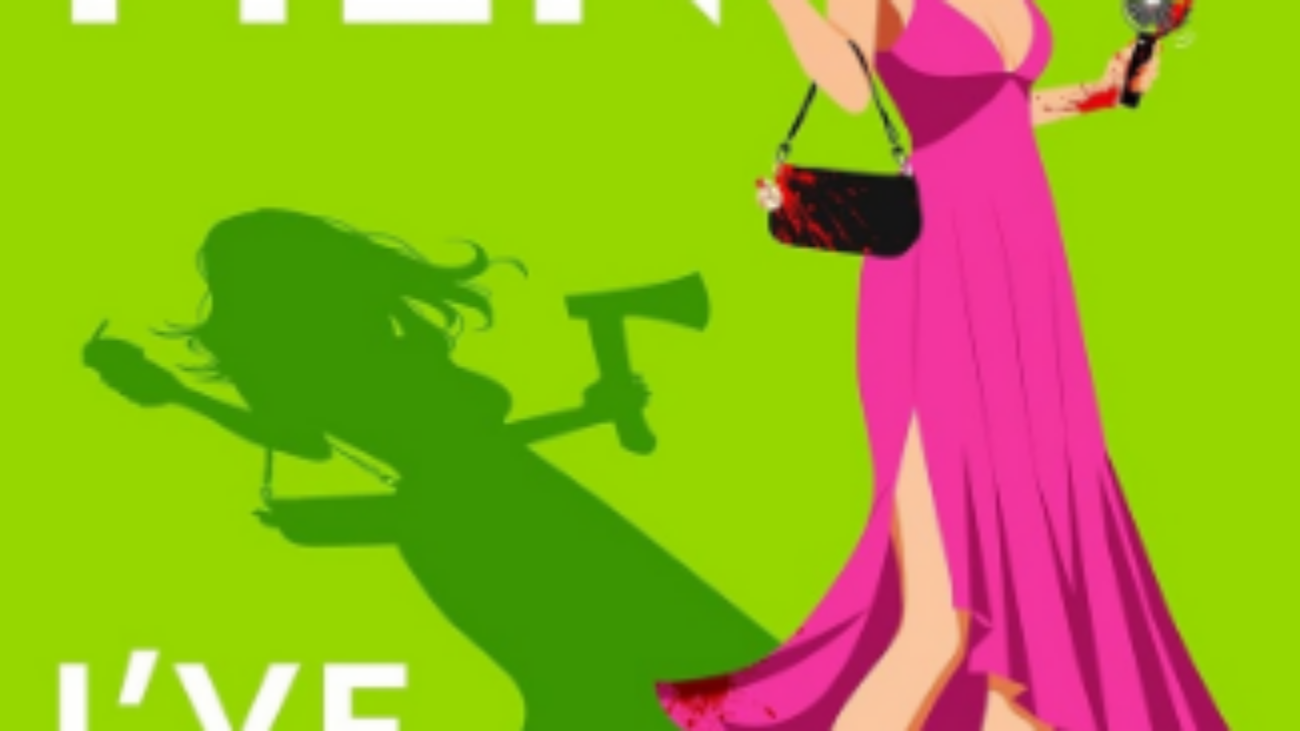
Our Marriage is Murder

Our Marriage is Murder by Carol Goodman

Reviewed by Ephantus Gold

Our Marriage Is Murder” by Carol Goodman is a gripping mystery that positions itself in a world where fiction and reality are blurred by a very thin line, one that, if crossed, carries devastating consequences. The book follows award-winning novelists Fred and Thea Morgan-Lane, who have been married for twenty years. They are flying to Italy for this year’s MurderCon, where they have been nominated for the prestigious Poirot Prize for Best Mystery Series. Morgan-Lane, the narrator, reveals that Fred sees her as a pushover, whereas she is the one who has always greased the wheels behind the scenes to get what they need from their publishing company. She also discloses that they are still together, not because they are in love, but because their brand as a writing couple has been quite profitable.  Purchase Here.

Morgan-Lane is exhausted and wants out, not just from the hollow shell of her marriage but from the series the two have written. She has spent months planning her exit, and has a termination clause that prevents Fred from continuing the series without her approval. But what she doesn’t know is that someone close to her has been planning a betrayal of their own. You sense early that she is headed towards a devastating twist, one that could end her life, in a world where any ally could be the enemy, and for that matter, an enemy who might ensure that the series is not hers at all to end.

Morgan-Lane is a charming character who wins the reader’s heart, especially after she finally resolves to reclaim her life from a marriage she claims she betrayed long ago, when she turned it into a business rather than prioritizing love. It’s undeniable that she has been running from herself all along. But it’s not her “victim-hood” that really makes her compelling; rather, it’s her complicity. She is self-aware, which makes her all the more compelling. Yet the most interesting part of her story is a game she invented with her husband that later serves as the mechanism for a real murder. The game was their private joke and a shared language. Here, you realize that the killer might then be someone who has been watching them long enough to know their secrets.

Morgan‑Lane’s story isn’t a quick happening. It feels more like watching two people drift apart because they stopped saying the things that mattered. You start noticing the little things that were not taken care of. After a while, their marriage comes across like something they’re doing as a routine rather than actually living. As the connection between her and Fred thins out, you can still feel her trying to hang on. It makes you wonder whether Fred is really the problem, or if she’s been avoiding the truth that’s been sitting right in front of her. The reader will soon start to feel her confusion and her hope, and you stay with her as she finally stops dodging what she’s known deep down all along.

Three Reasons for Revenge

Three Reasons for Revenge by Dervla McTiernan

Reviewed by Ephantus Gold

Three Reasons for Revenge” by Dervla McTiernan begins at Melbourne West Police Station, where Detective Sergeant Judith Lee has received a complaint from a psychologist, one Robert Walker, who claims to have been sexually assaulted. On hearing his name, Lee freezes. The complaint is soon followed by a video of him assaulting a patient, which gets sent to his wife, Vanessa Walker, the host of ‘Let’s Talk, Australia.’ She fears that, although it looks like a deepfake to her, an online leak could end her career. As you read on, you learn that Robert resents her and her success, which makes her next move critical.  Purchase Here.

Lee finds her bike destroyed- its leather seat and tires slashed, brake lines and wire harness cut in multiple places. More talk follows about other women who might have fallen victim to Walker. But then, Walker gets murdered. With no one left to investigate or prosecute, Lee is left with only one deep conviction- that she might be missing something. The case is not finished; rather, it has been interrupted.

Three Reasons for Revenge” by Dervla McTiernan begins at Melbourne West Police Station, where Detective Sergeant Judith Lee has received a complaint from a psychologist, one Robert Walker, who claims to have been sexually assaulted. On hearing his name, Lee freezes. The complaint is soon followed by a video of him assaulting a patient, which gets sent to his wife, Vanessa Walker, the host of ‘Let’s Talk, Australia.’ She fears that, although it looks like a deepfake to her, an online leak could end her career. As you read on, you learn that Robert resents her and her success, which makes her next move critical.

Lee finds her bike destroyed- its leather seat and tires slashed, brake lines and wire harness cut in multiple places. More talk follows about other women who might have fallen victim to Walker. But then, Walker gets murdered. With no one left to investigate or prosecute, Lee is left with only one deep conviction- that she might be missing something. The case is not finished; rather, it has been interrupted.

I loved how this story’s tension deepens, especially through a protagonist whose greatest strength was not only in solving but in doubting. I could feel her isolation right in my bones, especially when she was dealing with a complainant who wasn’t fully honest, yet remained desperate for quick action and justice. The author didn’t underline every betrayal or motive; instead, it was up to me to decode the characters’ silences, avoidance of eye contact, and heightened emotions when questioned. For me, this was unique, as were the retaliations, which felt like a minefield of words I couldn’t say.

Three Reasons for Revenge” is a story that seems to understand what happens to disturbed individuals who seek help but end up getting taken advantage of. McTiernan doesn’t exploit their situation for shock value but to demonstrate how a predator operates. She also understands that employing twists and threatening constant action is the perfect way to build tension. One moment, she brings you a victim, and just as you start growing sympathy towards them, you see their other side. Her pace moves like a master chess player, and her characters breathe through contradictions, leaving the reader with the feeling of being alive beyond the pages. You will notice that she grants them weight instead of long back stories, a weight that makes the choices they make, as well as those they fail to make, land with a punch. This is a greatly rewarding story for fans who prefer deeply layered mysteries and character-driven tension over cheap thrills.


Icefall

Icefall: The Rise of the Nine by Michael Newman & Jon Land

Reviewed by Lorena Padureanu

This book definitely deserves a screen adaptation. The detailed, vivid descriptions of every scene, landscape, and interaction quickly build an entire reality in the reader’s mind. From the frozen Alaskan wilderness to hidden underground facilities and alien worlds, the novel constantly creates a cinematic atmosphere. I could easily visualize every chapter unfolding like an episode, and the suspense kept me on the edge the entire time.  Purchase Here.

The opening immediately immerses you in the heart of the story. Rather than easing readers in, the book begins with one of its most disturbing sequences: the Nine, extraordinary beings convicted of treason, are forced to witness the execution of their own families before having their identities erased and their memories stripped away. It’s a brutal prologue, but it gives the Nine emotional depth rather than presenting them as simple heroes or warriors.

The narrative then shifts to present-day Alaska, where state troopers Sakari Muhtuk and Tom Dennehy investigate what appears to be a routine call involving a stranded Amazon delivery driver. Their natural banter provides a welcome contrast to the darkness of the opening while gradually building tension as they uncover an abandoned town and a mystery that becomes increasingly unsettling. From there, the novel expands into something much larger: a story about alien civilizations, forgotten history, ancient technology, and humanity’s struggle for survival.

The action never loses momentum. The scenes kept me in a constant wave of chills and goosebumps from beginning to end while horrific alien creatures consumed people within seconds, and the characters desperately fought for survival across the frozen wilderness, as well as inside sterile, high-tech facilities. The pacing rarely lets up, yet it never feels exhausting because every action sequence pushes the story forward.

One of the book’s greatest strengths is its cast. In the middle of the novel’s most intense scenes, I found myself genuinely invested in every character. Each of them has a distinct personality that makes them easy to care about without the authors forcing emotional moments. They feel like real people rather than archetypes, and their relationships provide an emotional foundation that keeps the story grounded.

I appreciated how naturally the novel weaves together ideas that don’t initially seem compatible. Science, spirituality, love, human connection, and the supernatural all become parts of the same larger narrative. During the quieter moments between terrifying discoveries and battles, Sakari Muhtuk—an Inuit state trooper whose family has preserved strong shamanic traditions—shares stories passed down through generations about mysterious beings that once threatened her ancestors. Those stories constantly invite comparisons between Indigenous legends and the terrifying creatures the characters encounter. Later, when the Nine discover evidence in the Titan Base vault that extraterrestrial civilizations visited Earth long before recorded history, it’s difficult not to wonder whether many of humanity’s ancient myths were inspired by real encounters with alien beings that early civilizations simply had no way of understanding. What later generations remembered as evil spirits or monsters may have been something far more literal.

The book’s explanation for humanity’s origins is equally compelling, leaving you wondering whether there might be a kernel of truth behind its fictional premise. This revelation provides an intriguing framework that could explain many of our Earth’s long-standing mysteries.

Gaia, the representation of Mother Nature, appears in a way that is far more mysterious and powerful than expected. Rather than a symbolic force, Gaia becomes an almost godlike presence working through a young boy willing to sacrifice himself for the sake of humans. This extraordinary force rekindles hope, feeling like a divine intervention at humanity’s darkest moment.

The book blends science fiction, horror, mystery, mythology, and action without allowing any one element to overwhelm the others. Every revelation raises the stakes while naturally expanding the story’s scope.

Such a surprise was the conflict between the novel’s two artificial intelligences. Rather than treating AI as a simple tool, the story presents two machine intelligences with opposing philosophies and objectives, turning their confrontation into both a strategic battle and an ideological one. It complements one of the novel’s central themes: intelligence alone isn’t enough.

Ultimately, Icefall is a reminder that technology, robots, artificial intelligence, and even extraordinary abilities are not enough on their own. While AI and nanotechnology may possess immense power, humans are the heart that AI lacks and desperately needs for clarity and guidance. AI, as powerful as it may be, can lead to failure and destruction in the absence of emotional intelligence. In the end, humanity’s greatest strength isn’t its technology but the compassion, resilience, and emotional intelligence that no machine can replicate.


Devil's Tango

The Third Estate: Devil’s Tango by D.R. Berlin

Reviewed by Ephantus Gold

Early in The Third Estate: Devil’s Tango, there’s a blunt line — “Men like Manning die after they open the wrong door.” It tells you immediately what kind of world you’re walking into: dangerous, rigid, and unforgiving. The scene that follows is quiet but tense as two Guild members go over Manning’s funeral and what they suspect about his killer.  Vale, a Guild operative, thinks Manning agreed to investigate something he should have declined. Meanwhile, Shorty, his colleague, believes that this might have led to Manning’s death. Their conversation is quickly followed by the arrival of Lovac, a Guild assassin who not only has a legendary reputation but also a long-standing contract on his head. He is seeking information concerning why the Assassin’s Guild broke its most sacred rule – never to assassinate any of their members. But at the altar, Manning’s wife reveals something to him that drastically transforms his vague hunt for truth into a targeted, urgent mission.  Purchase Here.

The novel simultaneously focuses on Sophie Allard, a former fighter pilot reassigned to a medical school after disobeying a direct order during a rescue operation. She now works as a medical student at a Level I Trauma center. It is not business as usual the day when a seventy-year-old male, a John Doe 109, is brought into the ER with a gunshot to the abdomen, accompanied by a woman who is “dry-eyed and still.” As the team prepares to treat him, he opens his eyes, grabs the front of Sophie’s protective yellow gown, dragging her closer, and whispers something into her ear before falling back stiff on the bed. Sophie stands frozen, her mind racing, totally unaware that by listening to his dying words, she has just stepped into a deep web of conspiracy. She has also become a key to a secret that very powerful people will do anything to protect.

As a fan of mystery fiction, I appreciated how Berlin, a U.S. Army veteran and General Surgeon, drew me in with intrigue and tension by initially hiding the identity of the main character. On the first line, she asks if “he’ll have the nerve to show,” which made me wonder who “he” was and why he wouldn’t show.  She adds another layer of suspense by using the metaphor of a “ledger written in secrets and blood.” The metaphor sets the tone — turning the world into one where people feel like participants in a dangerous game or future entries in that ledger. Throughout the book, she revealed the characters through their actions, letting their behavior speak for them, which made them feel real and layered — like when Lovac tightened his jaw at the funeral, showing that behind the cold assassin was a man who could feel grief and whose quest for the truth. was deeply personal.  Also, through Sophie’s failure to pull away from her patient, instead choosing to lean in and listen, Berlin allowed me to see how compassionate she was, a quality that would throughout the plot drive her character arc.

This book’s characters were not one-dimensional; instead, they had conflicting loyalties, hidden motives, and emotional depth. Because of her approach, Berlin presented characters whose flaws made me hesitate, even as I kept rooting for them.  Her concise writing made me feel the weight of every word, as was the case in Vale’s case of “posture easy, eyes not,” a few words that told me everything about his character without much exposition.  The plot made it clear I was in for something breathless, unsettling, and utterly gripping — and it lived up to that promise.


A Neighbor's Guide to Murder

A Neigbor’s Guide to Murder by Louise Candlish

Reviewed by Ephantus Gold

In “In A Neighbor’s Guide to Murder”, Louise Candlish delivers a tense, quietly unnerving psychological thriller set inside the exclusive Colombia Mansions in London. The story is filtered through the sharp, suspicious gaze of Gwen Healy, an older resident who notices everything that happens in the building. When a new subletter—a young woman named Pixie—moves into her neighbor Alec’s flat, Gwen is immediately intrigued. Pixie comes across as warm and friendly, but something about her doesn’t sit quite right, and Gwen’s curiosity nudges her into striking up a friendship and asking a few discreet questions. It doesn’t take long before her attention shifts to Alec himself, the leaseholder who brought Pixie in under the government’s Lease a Room Scheme. Gwen eventually discovers that Alec secured Pixie as a tenant only after misleading another prospective lodger, telling them at the last minute that the room was needed for his niece instead.

Soon enough, Gwen notices something odd through Alec’s apartment door, which he leaves open when attending to a delivery. Pixie is right there, barely dressed, lifting her arms high over her head in a long stretch.  The sight makes Gwen’s blood run cold at the thought that the two might be involved, especially since Pixie is young enough to be his daughter. Gwen has always seen herself as a defender for underdogs and victims, someone who will step in if she suspects mistreatment, and this suspicion triggers that instinct in her. Before long, she learns again that Pixie’s agreement with Alec is nothing close to what she had imagined it would be. She also gathers that Pixie, like many others out there who don’t have parents with spare rooms, had no other options. At this point, Gwen decides to do the unthinkable: call Alec out directly. But when that doesn’t work, after he tries blackmailing her with secrets from her own past, she decides to become a sleuth determined to uncover just how far dark he may have become. But little does she know that by doing this, she will stop being a defender and slip into something worse.

This novel covers significant themes that resonate far beyond the walls of Columbia Mansions. Among them is mental health, which weaves through the chapters in a quiet way, showing how vulnerability leaves people exposed to those who purport to help them, and fraud, which appears not just as a financial crime but as a deeper betrayal of trust, a violation that leaves victims questioning their own judgment. The novel also explores a darker kind of manipulation; one directed at people who have nowhere else to go. Through Pixie, readers see how holding onto a dream can make a person view such exploitation as just another bump on the road, something that will clear soon, but instead accumulates into something far worse. And underneath it all lies the thread of secret spying, another violation that reflects real struggles happening in cities everywhere, where the vulnerable have no voice but tears, and are too often left to fend for themselves. Here, a question arises, one I could not shake long after finishing the book- is it still a dream if it demands everything you and gives nothing back?

As a thriller fan, I really loved how this book’s pacing kept the tension humming. Surprisingly, there’s room for dark humor in unexpected places, such as using a newly replaced knee to carry out a certain kind of justice. This book delivers what its title promises- the secrets we keep from our neighbors and the dangers lurking behind closed doors. It is a reminder that evil does not always announce itself and that the chains that bind us are not always made of metal. Readers who prefer thrillers that break their hearts a little before putting them back together will definitely want to pick up “A Neighbor’s Guide to Murder.”


Authors: Get Reviewed

Readers: Latest Reviews

The Kings of Vegas

The Kings of Vegas by Karen Mack and Jennifer Kaufman

Reviewed by Ephantus Gold

In “The Kings of Vegas” by Karen Mack and Jennifer Kaufman, Josie King is summoned home after her father’s death for the family reading of the will. Her father, Roy King, is among the few men who came into town with nothing, before rising from a mere idea straight into the American Dream. Upon reaching her father’s ranch, where everyone else is gathering, Josie learns that her father requires any sibling who is not a Nevada resident to become one, and anyone living outside of Las Vegas to move back. Also, he needs them to work together for three years at his famous casino, the Jackpot. Anyone who contests the will gets nothing under the attached “in terrorem” clause.  Purchase Here.

The book brings the reader into the Jackpot, a setting that feels like a character in its own right. It is where the character’s emotions, predicament, and worries take a name. Most outstanding is Josie, whose instincts, trained from a young age, tell us that all is not well beneath the forced smiles of family reunion and the veneer of wealth and success that her father spent a lifetime building. The story involves a union crisis that threatens to tear the establishment apart, a lover who turns out to be next-door competition, and an FBI agent who plants early doubts in Josie about her brother, who runs the business. A lot is thrown at the reader, leaving them to wonder whom to trust and who is telling the truth as various factors arise, threatening an already cracked household.

The story incorporates vivid imagery like “Red-tailed hawks circling their prey screeching like a coven of witches,” as well as gambling language- “a hot hand,” “blowing on dice,” when not referring to the game itself, making the conversations feel like a bet and a high-stakes gamble. Each chapter drops either a new revelation or another rumor, and every one of them leaves a mark the Las Vegas sun can’t quite bleach out. As the story progresses, the tension tightens into a web of suspicion, with small doubts slipping in until everyone ends up caught in it. Instead of offering easy answers, it keeps handing you more uncertainty, until the truth starts to feel like just another lie waiting to surface.

And so, “The Kings of Vegas” by Karen Mack and Jennifer Kaufman will resonate with any reader who enjoys questioning every character’s motives and piecing together a puzzle whose pieces keep changing shape. It is a great slow-burn mystery with morally-complex characters and a family drama that refuses to tie itself up in a neat bow.


Authors: Get Reviewed

Readers: Latest Reviews


Kauai Spies and Bald-faced Lies

Kauai Spies and Bald-faced Lies by Larry and Rosemary Mild

Reviewed by Lorena Padureanu

Larry and Rosemary’s book is such a wonderful discovery. Blending mystery, thriller, and espionage around a warm core of family and human connection, Kauai Spies and Bald-faced Lies completely draws you in from the first page to the last.  Purchase Here.

The novel opens in 1996 Russia, where Max and Anya Volkov are left without a home or a future after a brutal antisemitic attack, with no choice but to emigrate to America alongside their closest family. Over the span of years, we follow their journey, from fleeing a homeland that had nothing left to offer them to slowly, painstakingly building a new life in a place completely foreign to them.

After learning about the Volkov’s family history, the narrative shifts to the year 2006 and to Kent Brukner, former spy turned Honolulu attorney, whose quiet daily rhythm is disrupted when a mysterious new client draws him into a dangerous case filled with hidden agendas. What begins as a legal dispute over a stretch of land bordering a U.S. military missile range quickly spirals into something far darker — a web of secrets, espionage, kidnapping, and gunfire that tightens with every chapter.

Throughout the novel, we follow Kent as the case pulls him deeper at every turn, all the while becoming increasingly involved in the Volkovs’ unfolding fate in ways none of them could have anticipated.

As the tension and dangers deepen, eventually reaching into Kent’s own home and threatening those he loves most, his former spy instincts are tested to their limits, as the truth proves harder to reach than he ever expected.

Beyond the gripping mystery and nerve-racking suspense, what sets this book apart is the human warmth that runs through it. At the core of every challenge, every danger, and every difficult choice stands the sustaining force of family, friendship, and human connection. It is these bonds, between husband and wife, between sisters, between unlikely allies, that give the characters the strength to endure, to grow, and to find their way through.

The Volkov family stands as the novel’s most powerful example of togetherness in both joy and hardship. From the moment they are driven from their home in Russia, Max and Anya face every obstacle as one. Watching them navigate a new country and a new life, always side by side, is one of the most quietly moving threads in the entire book.

Kent’s home life is one of the novel’s other treasures. His marriage to Katcha feels completely genuine – a partnership of equals, full of mutual devotion and trust. When a colleague is invited into their home and glimpses the warm family life, she finds herself wondering, with a pang of envy, whether she will ever be that lucky.

Larry and Rosemary Mild’s own partnership shines through the characters and the relationships they have built — loyal, generous, honest, and real. Characters lean on one another across distance, difference, and danger, and those bonds prove as vital to survival as any act of courage.

Kauai Spies and Bald-faced Lies delivers on every front: the plot keeps you invested, the characters keep you caring, and the ending brings both threads together in a deeply satisfying way.


Blue Advent

Advent Blue by Roland Allnach

Reviewed by Timea Barabas

Roland Allnach’s Advent Blue is not a pleasant read in the traditional sense. If you are looking for a cozy book to curl up with before bed, this isn’t it. This is a book for readers who are willing to step outside their emotional and mental comfort zones and engage with something unsettling. Set against a backdrop of severe overpopulation on Earth and a blooming Mars colony, mankind is torn between implosion and expansion.  Purchase Here.

At first glance, Will Fortner appears unassuming. He dresses casually and does not seek to stand out from the crowd. Yet beneath this seemingly ordinary exterior lies a remarkable depth and complexity. Will’s bold perspective and strategic mindset are among the qualities that make him exceptionally effective in his work. He is willing to look directly at truths from which others turn away.

Will works as a map navigator at the Choice Institute, where he helps clients make informed decisions based on potential outcomes. The map contains a multitude of realities, each branching from the choices a person might make. Drawing on his expertise, Will interprets the complex data set and offers his perspective on which path may lead to the most desirable outcome. Ultimately, however, the choice remains with the client.

Throughout the novel, Roland Allnach explores the tension between fate and destiny. Fate is a self-fulfilling force that ultimately becomes self-defeating. Destiny, by contrast, remains an open question, shaped by the choices we make and the paths we choose to follow.

When Will is offered the promotion he has long aspired to, triple-A level, he finds himself questioning whether this opportunity is the result of fate or destiny. Regardless, he accepts the position. As he steps into his new role, however, a third and more unsettling force begins to emerge: manipulation.

By accepting the promotion, Will gains access to the deeper mechanics of the Map, as well as a clearer view of the Institute’s layered architecture. With this expanded role comes a heavier burden of responsibility. However, this is partially eased by the introduction of a mandated companion, Mirai Redwater.

Their partnership becomes an anchor to Will’s experience of his new position. As they work together, the evolving dynamic between them reveals unexpected emotional depth in Will. Together, they bleed out the past as they chart a future.

Advent Blue stands out as a psychological thriller set within an unsettlingly familiar sci-fi framework. Roland Allnach demonstrates a sharp ability to elicit strong reactions from his readers, surfacing buried emotions, raising difficult questions, and sparking thought-provoking discussions long after the final page. Do you accept the challenge?


A Twist in the River

A Twist in the River by Stig Abell

Reviewed by Ephantus Gold

A Twist in the River starts out feeling like a straightforward mystery, but it slowly becomes something more personal — almost like you’re watching someone get pulled back into a life they thought they’d stepped away from. Jake Jackson tries to keep his distance when Livia tells him about the missing woman’s belongings turning up. You can feel him trying to protect whatever peace he’s managed to build. He knows how cases like this can take over his mind, and he’s not eager to go down that road again.  Purchase Here.

But then Claire’s husband shows up, and the whole situation shifts. The man is exhausted, scared, and clearly out of options, and Jake can’t pretend he doesn’t hear the desperation in his voice. That moment pulls him back in, not because he wants the attention or the challenge, but because he can’t ignore someone who genuinely needs help.

The pacing is steady — not slow, not rushed — just steady enough to let the characters breathe. Jake feels like someone who’s been shaped by the things he’s seen, and Livia balances him out. She’s the one who keeps him from slipping too far into his old habits, especially once she tells him she’s pregnant. That news adds a different kind of pressure, the kind that makes every decision feel heavier.

What stood out to me is how Abell mixes the personal moments with the darker parts of the story. He doesn’t gloss over the reality of violence against women, and he doesn’t turn Jake into some larger‑than‑life hero. Jake cares, maybe more than he should, and that’s what makes him compelling. As people start praising him — both in town and online — there’s this uneasy feeling that the attention might not be harmless. You start to sense that something is building underneath all the admiration.

The suspense grows quietly, almost unnoticed. It’s the uncertainty around Jake that keeps you hooked, the sense that he’s walking into something he can’t fully see. It’s the kind of book you can read in a couple of sittings, but the ending hits with enough force that you keep thinking about it afterward. The final twist lands clean and sharp, leaving a little echo behind.


Authors: Get Reviewed

Readers: Latest Reviews

Murder Most Delicious

Murder Most Delicious: A Novel by Danielle Postel-Vinay

Reviewed by Ephantus Gold

“Murder Most Delicious” by Danielle Postel-Vinay is a novel that serves up a mystery so rich in atmosphere and intrigue that it ensnares you completely, refusing to let go until its secrets have been fully uncovered. It pulls you into a world where every scent feels like it is holding a clue and where every character seems to be hiding something, setting the stage for a charged mystery, in which the loss of one sense might just be the key to discovering a deadly truth.  Purchase Here.

The story follows Olivia Beech, an American sommelier, whose career in New York crumbled after Covid robbed her of her sense of taste. She is not the kind of sommelier trained through trial and error like many others, but one born with a heightened, almost inborn sense of smell. Today, she is heading to an interview at the legendary bistro Chez Jacques, where one of the most exacting French chefs in Paris will test her ability to taste wine. Passing the test will give her more than a job. She will be able to repay her debts, rebuild her reputation, reclaim her dignity, and, more importantly, have a chance to start over. But the moment the tasting begins, she detects something deeply disturbing in the glass before her. This is right after a sinister scent, which she compares to a snake hidden in a basket of cherries, hit her nostrils. Unable to truly tell what it truly is, the only thing that remains is for her to taste the wine. Jacques, however, grabs it from her, insisting that its cork was intact. However, things take an unexpected direction when, after one gulp, he collapses.

The next scene introduces Chantal, a local florist who owns a flower shop called Les Fleurs d’Amour, and who is part of a tight-knit group of locals who look out for one another. She witnesses the incident, moves in with the composure of someone already used to crisis, and objects to calling the police, arguing that they will not hesitate to arrest Olivia since she is the only person who was with Jacques at the time of his death. In a neighborhood that is as gossipy as it is protective, and where everyone knows everyone else’s habits, secrets, and grudges, the reader is drawn to the edge of their seat as the mystery suddenly explodes beyond a single death into a web of suspicion and conflicting loyalties. Here, one can’t help but wonder whether fate will, once more, extend an olive branch to Olivia and offer her a true chance at redemption, or whether the incident will wipe out every remaining ounce of hope she has left.

This book gave me an experience of sheer immersion, where I was utterly captivated by a setting that functions as a character in its own right, rather than just a backdrop to the story. The tension felt masterfully woven, striking a compelling balance between the story’s central mystery and the emotional weight of the protagonist’s sensory journey. The characters won my heart early in the read, especially Olivia, whose vulnerability and resilience anchor the story with a quiet, persuasive power. I found the prose elegant and precise, its language both sensual and controlled. The subtle incorporation of French in phrases, culinary terms, and cultural rhythms didn’t feel ornamental at all, but instead pulled me deeper into the world, making the language itself part of my sensory experience.

I have never wanted to move back into a neighborhood to see what mystery and what surprise awaited next, as I did with the one in this book. “Murder Most Delicious” by Danielle Postel-Vinay didn’t emerge as just a mystery to be solved, but as an experience to be savored. It was richly rewarding to me as a reader who enjoys lingering with uniquely-gifted characters, and who loves following carefully placed clues that persuasively invite you to solve their puzzle. I highly recommend it to readers who appreciate beautifully-crafted mysteries that engage both the heart and the mind.


Authors: Get Reviewed

Readers: Latest Reviews