Reviewed by Ephantus Gold
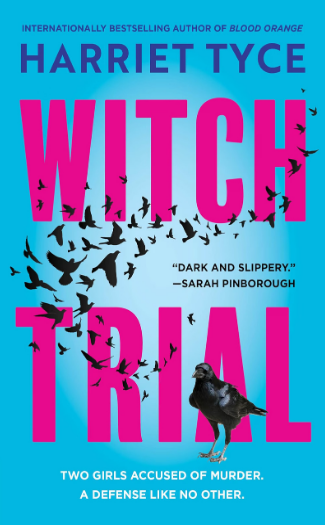
“Witch Trial” by Harriet Tyce features a courtroom drama involving two seventeen year old girls who’ve been accused of murder. We follow the process leading to their trial through the eyes of Matthew Philips, a heart surgeon and a juror, the latter of which he sees as a golden ticket and an escape from his ordinary life. In the early chapters, we realize that his marriage is in crisis, and that he has a daughter who he has neglected. His choice of jury duty over a holiday with his wife makes us know that even as we follow him into the courtroom, observing the evidence and listening to the witnesses alongside him, he is far from solving his own issues. Purchase Here.
Eliza Lawson and Isobel Smyth have been accused of assaulting Christian Shaw and threatening her with a knife, a threat that led Shaw to believe she was being attacked. What they didn’t know however, is that she had a pre-existing heart condition that could lead to a fatal heart attack.
A conversation with Emma, a jury member introduces Matthew to the words “witch-girls” and “witch-trial.” These words leave him not only unsettled but also pregnant with terrifying curiosity. A dream follows in which he sees himself running through Inverleith Park, a demon at his heels. Matthew wakes up shaken, especially because the park is the same place Shaw was murdered. Additionally, he saw a familiar face in it, one he can’t stop seeing. What he however doesn’t know, is that the dream is just the first crack into insanity. Hallucinations, paranoia and a break of his rationality will follow, and soon he will go rogue.
This story rides on a family story that runs concurrently with the trial, allowing us to understand why our protagonist is desperate, and why he is willing to destroy everything including his own integrity. This is a classic literary technique through which we see his personal flaws helping us predict the plot outcome. While historical witch trials were about persecution of outsiders or people with a different, unpopular belief, this modern day trial story reframes the narrative, drawing us into a reality about the case that may be more disturbing than any explanation. By disturbing, we are talking about persecution being enabled by the very people who are supposed to protect and uphold justice.
The story uses seventeen year old characters. This is a deliberate, layered decision that places us in a space where we either see them as children who have made terrible mistakes, or as young adults who should have known better. It is a great concept that explores the vulnerability of adolescence, and most especially the forces that shape teenage life today.
“Witch Trial” by Harriet Tyce bears a growing tension and a pacing that keeps shifting. Matthew’s sections grow increasingly unstable, and through every one of them we feel like we are sinking with him. The techniques are not really unique but Tyce uses them to create a profoundly disorienting experience that forces us to participate in it. Psychological thriller fans will love descent into madness and the questions of what’s really real, while crime fiction readers will appreciate the legal intrigue and the question of justice.