Swallowing the Muskellunge

Swallowing the Muskellunge by Lawrence P. OBrien

Reviewed by Rahul Gaur

Most of us take our freedom for granted, but we forget that at some point in time, the price for the freedom was so hefty that entire generations worked their whole lives and still couldn’t pay it off. Forget about freedom; your chances of surviving were extremely low. Survival depended on staying awake—awake to the cold, to memory, to illness, and to the truth people would rather ignore. And, this way, the novel opens a new world with its first chapter, where danger doesn’t announce itself with claws or fangs. It arrives quietly, offering fake promises, faith, authority, and safety.  Purchase Here.

The book is divided into 4 parts, which resemble the cycles found in nature. For example, four seasons, four directions, or four stages of life. Each part shows the progression of the protagonists (Oxfords). London Oxford is not introduced as a hero but as a man trying to keep his family safe in a world that keeps changing the rules. He is free, but that freedom depends on white landowners, the Wright family. Jane Oxford, wife of London, does not trust these arrangements. She senses that promises can be broken. Whereas London always feels that it is legally free, yet economically and socially dependent. Thus, the first part is about history, family, memory, and promise.

The second part is where the book takes an interesting turn. It shows how grief, racism, fear, and lies shape the lives of London, Jane, Abner, and others around them. There is a chasing scene where the antagonist follows Jane Oxford before killing her, and it is written exceptionally well. It will definitely give you goosebumps. After the death of Jane, desperation takes over London, not hope. London drinks to numb his pain. Abner is forced to grow up fast. He must care for his sisters even though he is still a child. He knows the girls were his responsibility. The book does not soften this burden. It shows how trauma passes from parent to child. In the third part, the story becomes darker and more urgent. When bodies start piling up suspiciously, everyone is freaked out. Whom to trust and whom not. Here, the author has done full justice with the portrayal of the antagonist. He is charming, authoritative, and clever, and he uses politeness to mask the brutality. Though he is not loud and scary, to get his things done, he can be anything. One powerful insight in this part is the role of women. The women join together to protect their children. They stand up when the men hesitate. Their unity becomes a quiet form of power. Fourth part beautifully concludes the novel’s central concern and reaches its darkest and most meaningful point: that even when evil is defeated, suffering does not end. Freedom is not a single event but a constant struggle. The book also refuses simple moral clarity. Survival sometimes requires brutality, and justice is imperfect.

O’Brien has beautifully shown that living as a Black family in the 18th century was not at all easy. Their daily struggles and fear of getting into any trouble without their fault are horrific. What makes the book work is how it balances character and plot. The research done to weave real history with chilling Indigenous folklore is commendable. The author’s writing is simple, and the prose often uses short, direct sentences that mirror exhaustion, fear, and urgency. However, the lack of illustrations leaves some weakness in the narration. Regarding the pacing, it is dynamic but plays an important role in the book. For example, the middle of the book slowed down quite a bit as the settlers dealt with the logistics of camp life. However, these moments added to the “stuck” feeling of the blizzard. Similarly, in the final chapters, it spikes when there is a desperate chase through the deep snow to save young Annie. By the end of the book, the reader will definitely ask, what is the real price of freedom? And can we ever truly reach a place of peace, or is it an endless pursuit?

Since this is the first novel in the Mischief Makers series, I am sensing that all the books in the series will connect to a central story related to Wìsakedjàk. So, pretty excited for the upcoming books.

The Real Dreamwalker Presents El Nino

THE REAL DREAMWALKER PRESENTS: El Niño by Ashlyn Jacobs

Reviewed by Daniel Ryan Johnson

Many people share common anxieties and fears about the future. However, when you start sharing actual nightmares, with all the exact same details, it may mean the Dreamwalker is near. THE REAL DREAMWALKER PRESENTS: El Niño is an anthology series displaying vignettes of horror in Tucson, Arizona. Author Ashlyn Jacobs pulls us in and under before the book even truly gets going as concrete hands take Deke and Corey down in the prologue while the Dreamwalker watches on.  Purchase Here.

While these tales of terror start by presenting us with stories that are seemingly only connected by a common location and villain, as we delve deeper into the book, we find more connecting threads that begin to suggest a larger, more complex picture. The intentions of the Dreamwalker become harder to determine, and the mysteries begin to match the fear scrawled across every page.

With few characters that appear in more than a single chapter, there isn’t much time for character development in THE REAL DREAMWALKER PRESENTS: El Niño. However, this doesn’t stop the characters who do appear in the book from being compelling in their short time on the page. We are still pulled into their world and left wanting to know more about what happens with them next. At least, that is, for those who survive.

If you love looking for new fuel for your nightmares, reading a chapter from THE REAL DREAMWALKER PRESENTS: El Niño before bed will do the trick. Each story in the book is able to stand up on its own, providing the creepy factor that fans of horror are looking for in an anthology like this one. At the same time, the pieces you get as part of the larger story will easily keep any mystery fans intrigued to keep flipping through the pages and learning more.

Ashlyn Jacobs does a wonderful job of building suspense and leaving the reader with that feeling of a tingling on the back of the neck as they put down the book and lie down in bed for the night. You can’t help but feel that you are being watched. That a figure with a black baseball cap, headphones, and wrapped in a gray blanket is outside your window, floating off the ground, watching you, reading your thoughts, and learning all about your deepest fears.

Extraterrestrial Noir

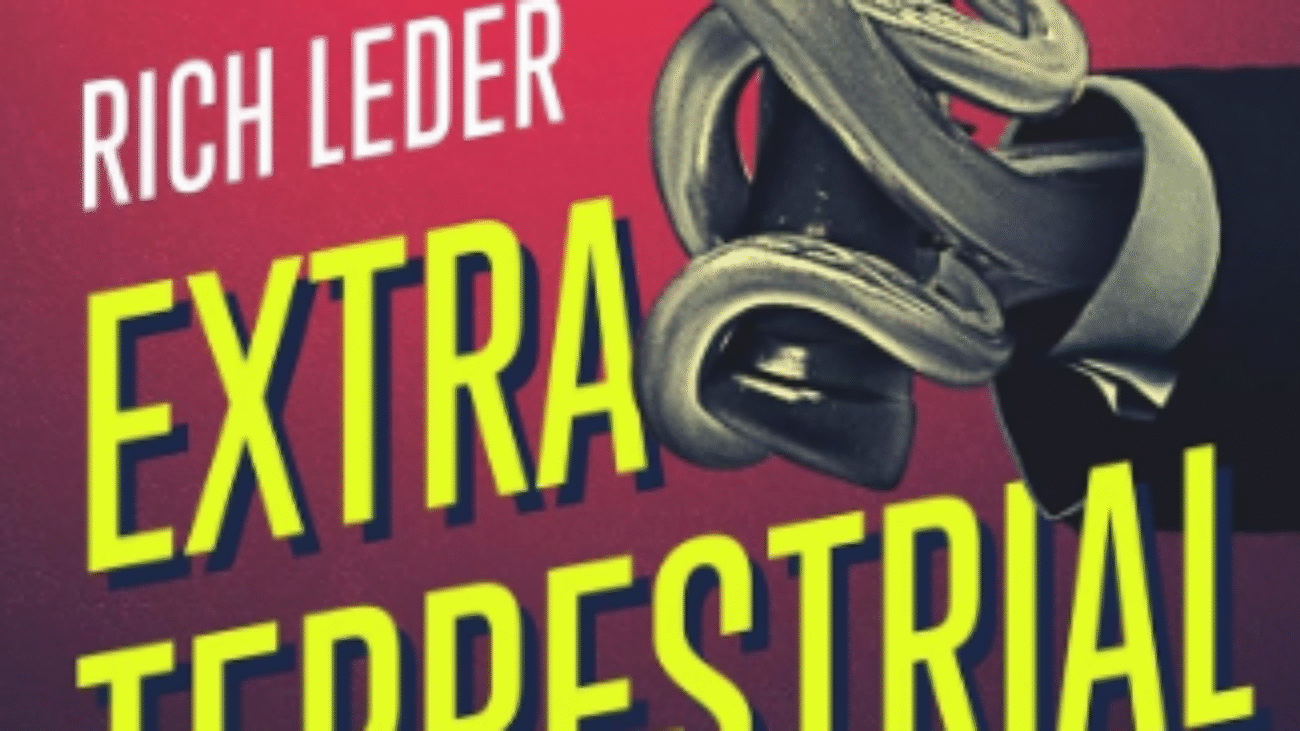
Extraterrestrial Noir by Rich Leder

Reviewed by Daniel Ryan Johnson

The world is full of stories of deadly alien invasions, and there are also many notable examples of fish out of water extraterrestrial visits to our little planet. However, in Extraterrestrial Noir, author Rich Leder decides to see how well these elements play together. Attracted to Earth by an SOS sent out into the night sky from the flashlight of a suburban housewife, a quirky shapeshifting alien makes a visit to Earth to lend a hand. While this may sound like the setup for an offbeat sitcom like Alf, things quickly take a dark turn as this alien has a penchant for noir.  Purchase Here.

Once again, Leder shows off his bleak sense of humor as this twisted take on first contact rapidly devolves into a deadly trip through the hidden criminal underworld that lies beneath an idyllic suburban paradise.

The plotting of Extraterrestrial Noir is superb, keeping the reader engaged and excited to find out what crazy turn the story will take next. The story has a wide range of characters, and each chapter gives us a glimpse into the brain of the person in focus, with our enigmatic alien always being viewed from the outside without getting to peek into their unfathomably complex mind.

While the novel is fairly long, the action-packed pacing and witty wording of the writer keep propelling you over the pages, and you find yourself breezing through the story at a breakneck pace, unable to find a pausing point to put down the book and take a break.

The character development is wonderful, as, aside from the visitor to our planet and our kid genius tasked with protecting her family, most of the other characters are not what they first appear. While they may seem to be fairly normal everyday folks from the suburbs at first glance, once their onion is peeled back, their dark secrets hiding underneath are revealed.

Don’t go into Extraterrestrial Noir expecting the characters to act with reason. The novel is full of the “don’t go in there” kind of moments you see in horror films, where the actions of the characters are clearly going to lead them to their doom. However, that is part of the fun of this story, as Leder is constantly using the narrative to highlight the stupidity of mankind with his typically twistedly comedic charm.


A Bullet for Carlos

A Bullet for Carlos by Giacomo Giammatteo

Book reviewed by Chris Phillips

Giammatteo starts this new series with a blast. A drug sting goes bad and the cops go in knowing they would not have backup. Everything that can go wrong does for detective Connie Gianelli. In a moment of desperation, she makes a phone call for help.  Purchase here.

From there on, she seems set on a path with trouble on all sides and a very narrow line to follow to survive with her reputation and life intact. She runs into trouble at work and finally has to bring the family she knows but cannot acknowledge in to rescue her.

“La famiglia e tutto- Family is everything” – Dominic Mangini. This quote is the key to the whole story. Connie was raised by Maria, who everyone assumes is her mother. Only her uncles Dominic and Zeppo know the truth, and they are not talking. These are the pivotal characters when the story begins. As the trouble deepens, crimes committed come to the forefront. Connie is transferred to cold cases and meets Frankie Donovan, a hotshot homicide veteran who is investigating her case.

The characters are alive and full of very human flaws. They develop smoothly with the bumps that happen to all humans. Special circumstances awards go for Connie trying to solve some bloody, messy, rape murders crossing state lines and still trying to clear her own name. That is when the problems really begin.

Connie is a good cop with a good reputation, but a poor judgment call puts that all-in jeopardy. Frankie is a no-nonsense detective bound to find the truth and the missing drugs. Others come in to help and look deeper and still get the cases solved. Uncle Dominic is always in the background and he continues to “help” where he sees it making a difference. It would be better if he wasn’t a member of organized crime, a high-ranking member. Connie is encouraged to follow up on a cold case that takes her out of Brooklyn and to Texas. Everyone thinks this is a good place for her to stay so the problems don’t stay in anyone’s attention, but there is a problem. Evidence keeps disappearing or misleading the investigation. Problems develop in Texas and an undercover operation going bad leads to more suspicion and more guilt for Connie to cope with.

In a climax of supreme intensity, Connie comes face-to-face with a serial murder that is more vicious then even she can imagine. The book ends well but with cliff hanging events on all sides.

The tale is appropriate for adults because of the violence and the language. As stated at the beginning of the book, this is the first in a series “Blood Flows South.” This reviewer is waiting for the next one as well as the other series Giammatteo promises with a segment to entice readers.