Monsters Arise

Holiday Spirit Book 3: Monsters Arising by John DeGuire

Reviewed by Ephantus Gold

“Holiday Spirit Book 3: Monsters Arise!’ by John DeGuire is a book that will give you friends in beings you never imagined or expected. These are characters you will be surprised how quickly you get drawn and attached to, and how strongly you will want them safe as they unravel a world that feels increasingly fragile with each new page in the hands of individuals who pose the question of who the real monsters really are.  Purchase Here.

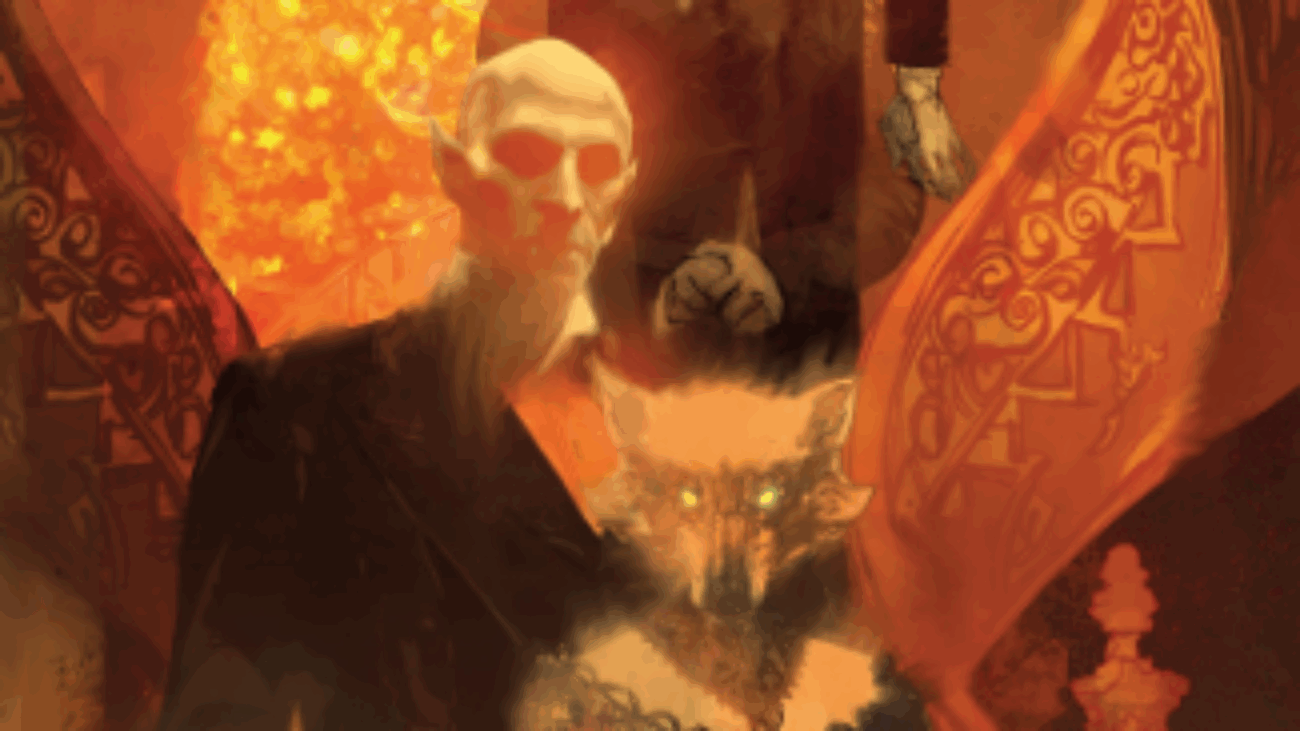
The tale takes us right to the edge of the world – the Arctic, where the main character, Count Dracula, who is described as a peripatetic figure, appears as a hidden traveler moving through the storm. He is riding a resurrected woolly mammoth, accompanied by a saber-toothed tiger. They are planning a rescue that feels as emotional as it is dangerous for his friend, Captain Saul Frankenstein. Saul was kidnapped for his unique monstrous biology under the orders of Dr. Moreau and Professor Moriarty. One is a scientist and the other a criminal mastermind, both of whom intend to exploit him for their experiments. Dracula himself had also earlier been captured and surgically given a human heart transplant by the duo. They had subjected him to the procedure, hoping to study his hybrid vampiric physiology and use their findings to unlock secrets to prolonged life for specific human elites. As for Saul, it turns out that he was found near death by a female Yeti who took him home, nursed him back to life, and later became his wife according to the Yeti customs. He is now the Yeti’s king and has adapted to their brutal ways. He also oversees their gladiatorial ice battles.

Elsewhere, Dracula’s wife, Aoife, learns, much to her shock, that her husband is alive. We first meet her mourning for her kidnapped twins, newborns who Dracula himself didn’t know were born. The news gives her much-needed hope and renewed determination to fight on against Moreau’s network, alongside Sherlock Holmes, Dr. Watson, and the invisible Dr. Ralph Ellison, forming an unlikely alliance between humans and monsters, united by a shared longing for survival and redemption. As you follow their planning, several questions arise, chief among them whether Dracula’s heart will survive the cold weather in the Arctic let alone the journey ahead to find his family, whether his departure from the Yetis land will be seamless, whether Saul, who is living his best life as a king will accept to join him and lastly, what exactly Moreau and Moriarty are really building, a plan so dire that they are willing to weaponize monsters to achieve it.

This tale wields great characters who smoothly propel the plot, such as Dracula, whose health and unknown fatherhood create urgency and tension, Aoife, the Werewolf Contessa who embodies maternal ferocity and the moral heart of the human-monster alliance, Saul who embodies adaptation and redemption, The Invisible Man who bridges science and monstrosity, Holmes who offers the logical, deductive lens through which the conspiracy gets uncovered, Annie, Emma, and Pete who represent innocence caught in the crossfire, reminding us of the cost to the next generation, among others. It uses turns and twists but leans heavily on heightened drama and emotional tropes, with most chapters ending in emotional uncertainty, not in what will happen next but in how it will feel. The author is brilliant enough to use dual narration that provides the long read with emotional contrast and deep sensory immersion, where the environment feels like a living character and classic characters such as Dracula and Holmes become modern archetypes.

“Holiday Spirit Book 3: Monsters Arise!’ by John DeGuire is bound to leave you richly entertained even if you are not a fan of classic monster lore, precisely so because it just doesn’t tell a story but rather makes you see a beautiful but broken world, where the greatest fear comes not from a literal monster but from the coldness and greed of the human heart. With lessons such as ‘a family is chosen, not given’ and ‘survival requiring adaptability, not just strength,’ this is a book that will leave you looking at love, the past, grief, and power differently, as fuel, not for destruction but for transformation.


Framed in Love

Framed in Love by Clifton Wilcox

Reviewed by Diana Coyle

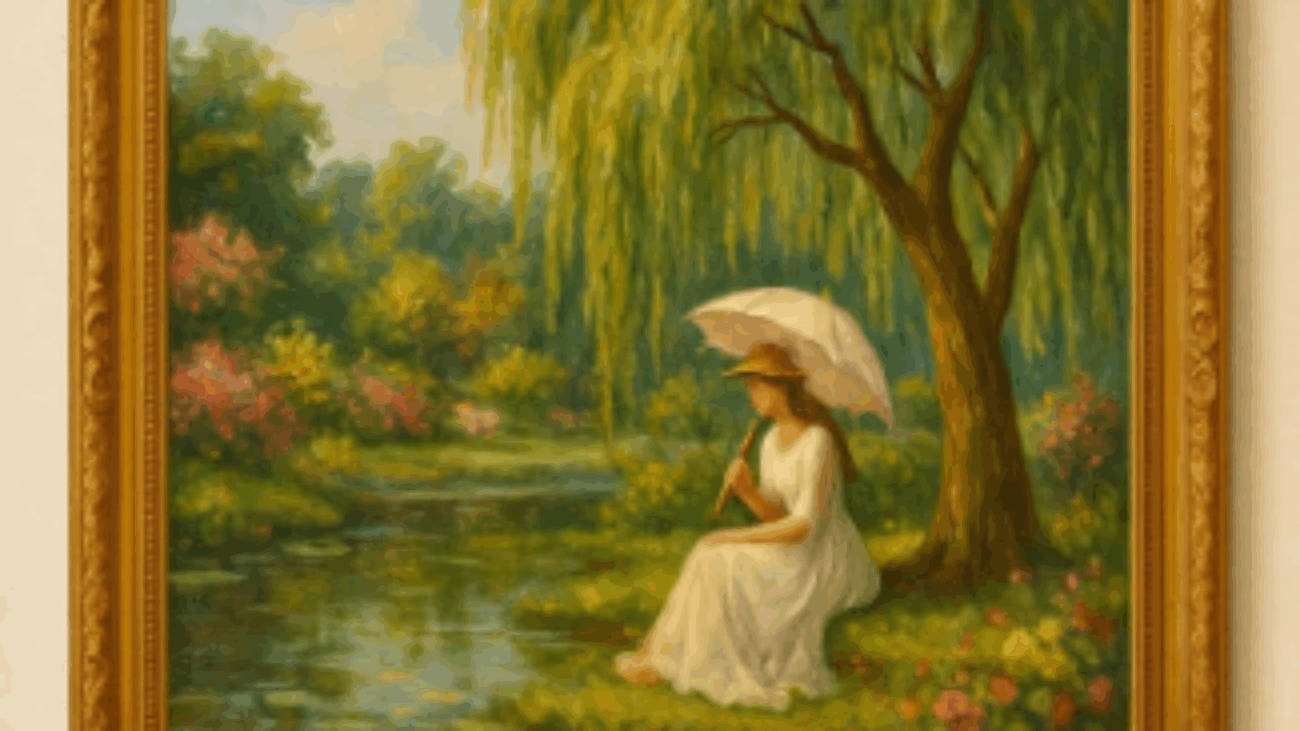
In “Framed In Love” by Clifton Wilcox, we are introduced to character David Cross, who is struck by lightning while he is painting the twisted oak tree he has in his backyard during a bad summer storm. From that moment forward, his life seems to change drastically. He realizes that he sees things differently than he did only minutes earlier, before being struck by lightning. Everything is crisper and more detailed to him. As he returns to his attic room, he passes the dusty antique painting his grandmother had passed down to him. It is a landscape painting depicting a Victorian park. He is strongly drawn to it this time, unlike when he has looked at it before. Although this time, when he looks at it, he’s actually transported into the painting. Realizing this can’t be happening, he looks around and locks eyes with the most beautiful woman sitting in the park that’s not in the original painting. From this moment forward, their lives will change forever.

I truly loved the entire concept of David being transported into the painting and meeting Abby, who had been waiting for his arrival for some time. As Clifton Wilcox slowly unfolded his story and showed the characters getting to know one another, I felt the spark between David and Abby. I had hoped that maybe, against the odds of the entire situation, some spark could happen between them, even though she was locked in the painting. The whole idea of her painting an interpretation of another artist’s version of this painting, then being transported into the scene, and then locked into the painting, just made my mind truly believe that this was happening. I loved how Abby explained that, over time, the painting would start to disappear, as if it had never existed in the first place. In turn, she would eventually disappear as well.

I enjoy stories that have a strong setting for the characters to exist in, and “Framed In Love” didn’t disappoint. The idea that the setting of this story had two settings, David’s real world and the painted landscapes, made this a unique story to watch unfold as I turned the pages. I loved that the majority of the story happened in a painting. This idea truly blew my mind because it was never something I would have thought of before Wilcox did it in this story.

Clifton Wilcox is an award-winning author, a retired federal employee, and a college professor. He spends his time writing and traveling with his wife and children.

Overall, “Framed In Love” by Clifton Wilcox is one story that will grab readers’ attention and hold it until the very last words are read. It has an intriguing storyline, well-developed characters, and the idea that love may very well overcome any obstacles one faces, including trying to save someone who exists in a painting. Well done, Mr. Wilcox!


Very Slowly All at Once

Very Slowly All at Once by Laurel Schott

Reviewed by Ephantus Gold

“Very Slowly All at Once: A Tense Debut Thriller Full of Twists About the Danger of the American Dream that Gillian McAllister Calls “Devilishly Twisted” by Lauren Schott is a gripping and wickedly entertaining debut thriller that begins with a quiet moment that suddenly feels anything but ordinary. When Mack, an assistant professor of English, notices the envelope in his wife’s hand one morning, a quiet but shattering chill creeps down his spine, and his thoughts circle back to his department’s supervisor’s earlier warning about his inappropriate interactions with his students during and after the COVID lockdown. However, far from it, it turns out to be the third check in six weeks sent to him by mail, bearing his full name and postmarked from Newark, New Jersey, from a company called Sunshine Enterprises. The first one was a $5000 check, which he thought was from his criminal father, who maybe was trying to reach out to him after a long, lingering silence and a twenty-five-year period defined by a biting sense of “enmity” between them. He decided to deposit it, but remained bewildered by the sender’s consistent practice of sending other checks, each with $1000 more than the last.  Purchase Here.
This story captures a devastating series of discoveries. Their cumulative weight is startling and reveals unsettling truths about Mack’s father. The story also exposes the precarious state of his mother’s care. Hailey’s shocking decision to entertain a man she sees as better than her husband adds more tension. Worst of all, this choice results in her being called out by a client in an unexpected turn. Hailey is then humiliated, used, and ghosted in quick succession. This experience seems to be part of a well-crafted blackmail and a heinous move that feels linked to a dreadful request her family may not outrun.
“Very Slowly All at Once” by Lauren Schott pulls all the right notes of a domestic thriller, with every new chapter looking determined to tighten the screws around what makes ordinary life suddenly vulnerable. It is a tale that carries a strong sense of horrific dread, as if it waits in a corner, poised to pounce on the reader and expose the fragile foundations upon which its characters have built their lives. It is also a novel that carries this slow intensity through its lines, revealing how financial strain, fractured relationships, and buried resentment can quietly corrode judgment and, as a result, build life-altering consequences out of small compromises. Schott has offered mystery lovers an outstanding work with precise pacing, emotionally grounded characters, and a story line that, from the outset, tugs at familiarity and vulnerability before steadily sliding into something far more unsettling: biting more than you can chew and life turning into a river of unexpected outcomes.
Second Place:  A War Through Destiny by Sarah Lindsay Peterson

A War Through Destiny by Sarah Lindsay Peterson

Reviewed by Lily Andrews

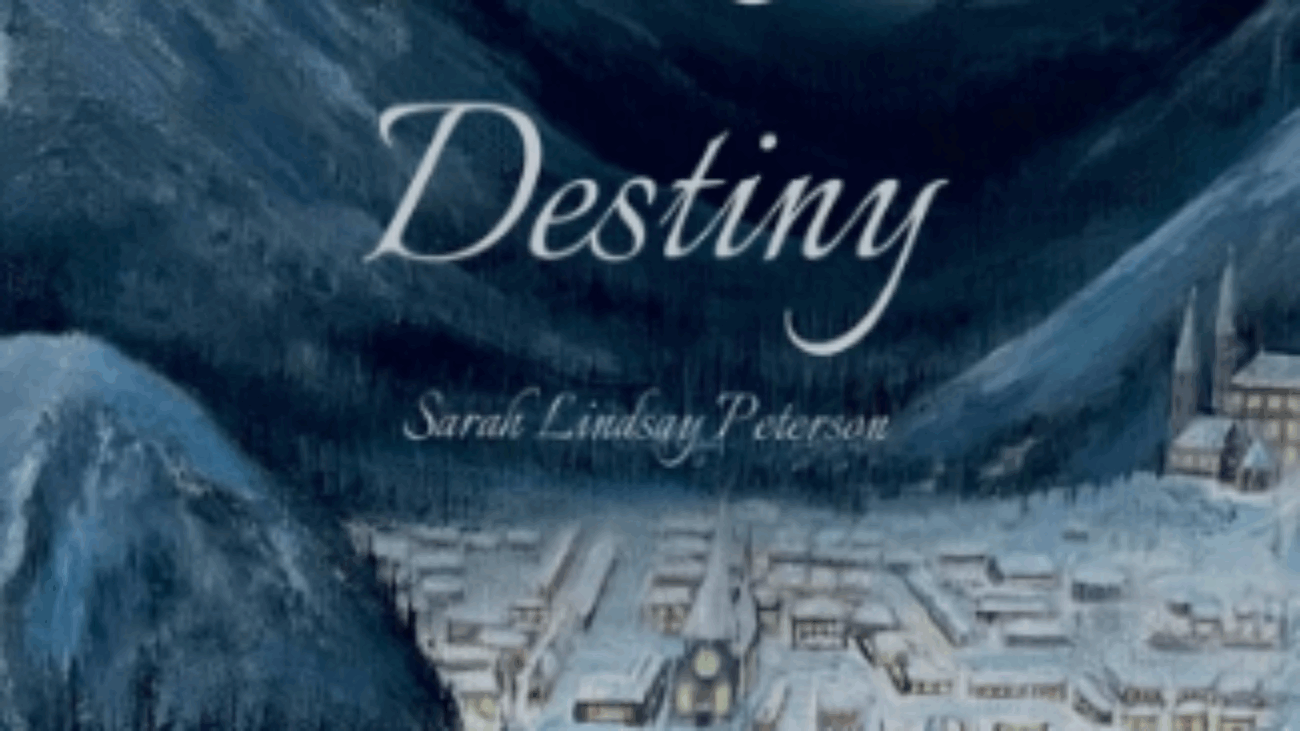
“A War Through Destiny” by Sarah Lindsay Peterson is a gripping story that opens in a secluded ancient ice enclave in Dukhovia, where a sacred meeting is going on between the Shaman, a group of eight spiritual leaders. These men are seeking guidance from the Spirits on how to keep the people safe and their faith alive now that the war has ended. They are, however, taken aback by a revelation that two new heirs have been born, in what they see as a rare direct communication by the Spirits. It is further prophesied that following them will bring great turmoil and international disdain to the country, but, again, denying them will be like wishing a death sentence on themselves. What however, leaves the Shaman more shocked and deeply divided is the fact that one of the heirs is from a banished family, and the second one is from a family that had been stripped of their ancestral name following suspicion of trying to overthrow the ruler. At this point, some of them are left questioning the decision of the Spirits, wondering whether they can see a future that the men cannot or whether the Spirits are simply punishing the land.  Purchase Here.

Elsewhere, the story introduces Stacy, a child termed as unaffected by the cold, unlike her brother Dan. She has a deeply ingrained belief instilled by her mother that the Dukhovian people don’t simply choose paths; rather, they are called to a purpose by the Spirits. One gets the sense that she is caught up between living in America, where she feels isolated and boxed in by expectations, and a recurring dream that feels more than just a mere dream, but which she has no idea how to answer to. Little known to her is an immediate sense of danger that surrounds her, as an assassin who has been trained since childhood and now sent to specifically kill her, arrives in America. The latter is also on a family honor redemption mission that, unknowingly to him, could potentially condemn his own soul and defy the very Spirits he believes he serves.

This story is set in the corridors of a divided heart, twisted pathways of duty and guilt, shadowy halls of prophecy and power, and what feels like a dangerous crossroad of destiny. It captures a severe cultural shock that doesn’t reveal itself as just a background detail but a critical plot device that helps raise the stakes, create a sense of sympathy, and set up dramatic irony. What begins as a seemingly simple plot quickly spirals into a complex web of moral ambiguity that is bound to bring readers into character study as well as deep internal inquiry into whether prophecies are absolute and whether destruction necessarily means evil occurrences.

Stacy comes out as a strong protagonist, who embodies the conflict between tradition and modernity, as well as the relatable struggle of chasing after a destiny denied. Her grandparents, brother and cousin, offer a living reminder of the cost of being a Dukhovian and how the past can sometimes imprison you in its traumas, silence and legacies of violence. Together with other supporting characters like Rachael, whose absence feels like it would deny Stacy’s character a much-needed boost, these individuals are well drawn in parallel, not in competition, with each shining their own light. From the start of the story, it feels like they are working in sync, to bring the novel’s central themes to a satisfying crescendo and also, a powerfully consequential one. In this context, “A War Through Destiny” by Sarah Lindsay Peterson is that book that you will want to read if you are feeling like a stranger in your own skin, caught in between worlds, and in  need of something that will not only entertain you but offer something better – understanding.


Second Place:  A Case Against Jasper by Clifton Wilcox

The Case Against Jasper by Clifton Wilcox

Reviewed by Lily Andrews

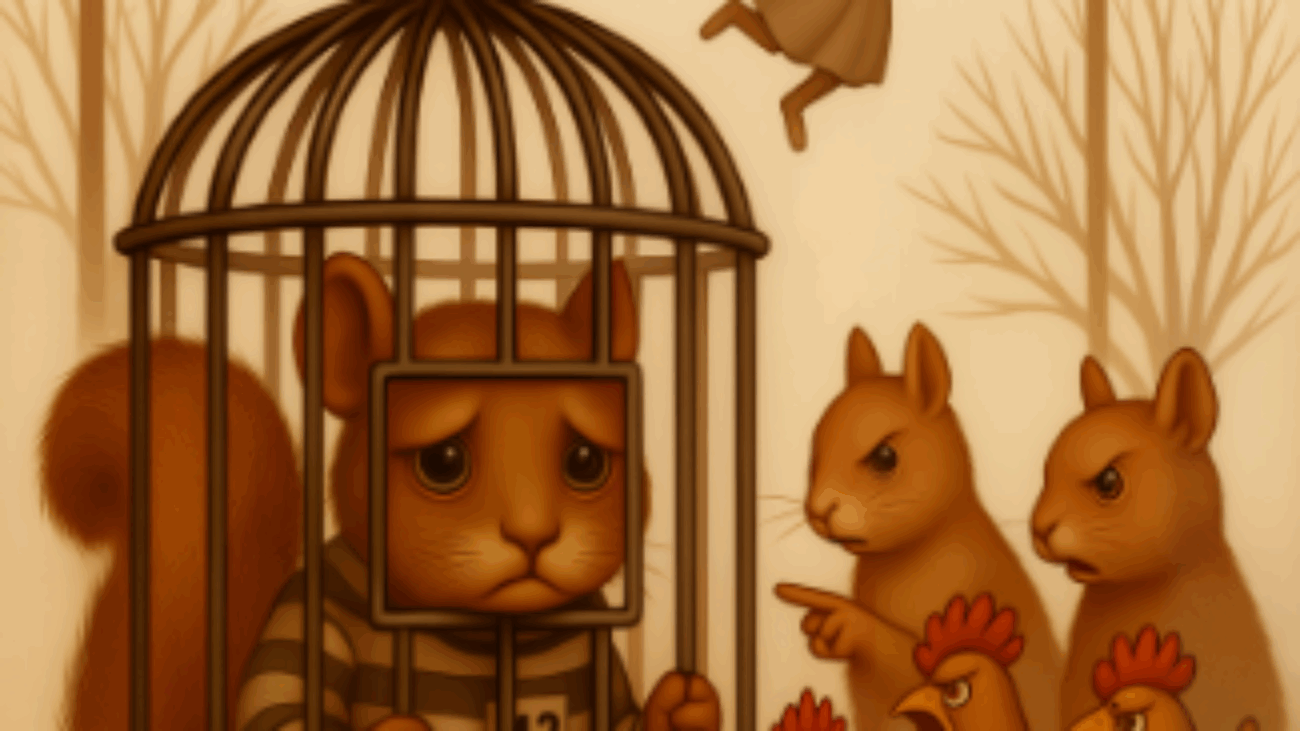
“The Case Against Jasper” by Clifton Wilcox takes us right into the Wildwoods Farm, where rumors are running wild and trust hangs by a thread, in one of the most chilling tales of deception vs. truth you’ll ever encounter. There, “A scream, a slip…” becomes the spark that sends little Jasper on a desperate journey for answers that no one dares to speak aloud.  Purchase Here.

Jasper and Jenny are enjoying their favorite game when the latter suddenly hits the ground with a thud that no creature can ever forget. In a short while, accusations fill the air that Jasper deliberately shoved her. “He could never compete with Jenny, and he loathed that…” they say. Invited by the elder of the farm, enters Ink, a clever ferret detective with a quick wit and a keen eye for details, and Fiona, “The Whisper,” whose reputation for her uncanny ability to pick up on cues and to overhear whispers and quiet conversations precedes her. Eager not to let the whispers write the ending, the duo sets out to untangle the rumors. But little do they know that the truth is darker and far closer than anyone dares to imagine.

What follows is a walk down a detective’s journey. Ink and Fiona are not just following what everyone is saying; instead, they are looking into what one can easily overlook, including non-verbal cues of their suspects —the pause before a name, a shaky voice, the nervous flick of a tail. At the farm, looking the other way is the path of least resistance that may keep them safe and liked. Their choice here becomes the story’s moral heartbeat and Wilcox’s belief that justice is not found in consensus but in courage.

In “The Case Against Jasper,” one senses early into the read that the animal characters are not simply personalities but moral instruments, with each of them embodying a distinct attitude towards fear, truth, and justice. Each of them represents a recognizable human tendency, including innocence, idealism, moral laziness, and reason and empathy. By giving them these human traits, Wilcox frees the story from direct human context, allowing the reader to examine moral failure in its purest form. He has also given them distinct behavioral language, which enables the reader to learn who they are by how they sound and react, not just by what they say. Of worthy note is how he allows the characters to change throuh understanding, a quality that elevates the book, distinct from a mere fable, and far less cynical than popular ‘Animal Farm’ stories.

Wilcox has written with a measured, lyrical precision that feels timeless. His sentences unfold with the rhythm of oral storytelling that is clear enough for young readers, yet layered enough to engage adults looking for reflection and allegory. His tone is morally charged, inviting contemplation rather than shock even in moments of tension. Fans of reflective mysteries as well as those who enjoy gentle yet profound storytelling will resonate most with his style. Whether approached as a fable, a mystery, or a mirror held up to our own worlds, “The Case Against Jasper” will leave its audience with a lasting sense of the foundations upon which justice stands.


Blood on the Icehouse Wall

Blood on the Icehouse Wall by Jessica Meats

Reviewed by Diana Coyle

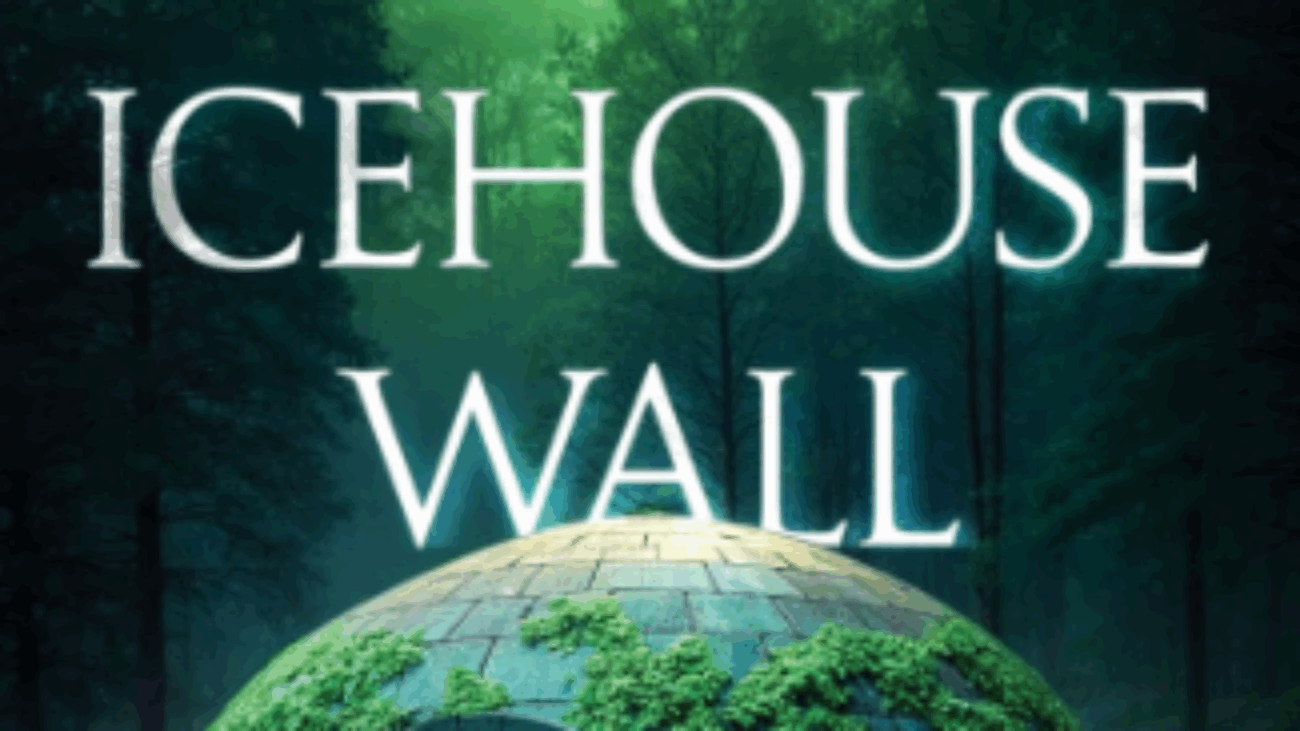
Siblings, Mandy and Ben, are living in a foster house owned by Mrs. Bellows in “Blood on the Icehouse Wall” by Jessica Meats. These two are close with each other and try to help each other with life’s ups and downs as they arise. The oddest thing is that neither of them could ever prepare themselves for something they found out about Ben. One particular evening, he is very unsettled and feels that he needs to go outside because he is being pulled by an invisible source. As he’s out in the woods going for a jog, Ben sends a text to Mandy to come outside because he found something he needs to show her. When Mandy meets up with him, he’s acting odd, but shows her these cryptic ruin markers on a building that everyone refers to as the Icehouse. Things quickly start unfolding, and both are thrown into a supernatural world of witches and werewolves as they stumble upon a dead body in the woods and someone leaning over that body. Did this person kill the man lying on the ground? What are the cryptic ruin messages that are painted, in what seems to be blood, on the Icehouse? What do they find out about Ben?  Purchase Here.

Although this was a very creative storyline, I was disappointed that it seems to move way too slow for my taste. Considering there were a lot of things happening in the scenes, the plot just moved too slowly to take it to the next scene. Unfortunately, this made engaging with the characters and the storyline a bit of a task for me.

Also, there were quite a few characters throughout this book, and many introductions happened at the very beginning. It took a bit of deciphering to see who was an ally and who was the enemy. When the story finally started to reveal a main development for Ben, something didn’t fit for me in the behaviors he was displaying. This also made me still feel disconnected to him even though I wanted to connect with him and Mandy.

I read that Jessica Meats loves writing about strong female characters, and there were two females, Mandy and Elizabeth, who were both independently strong throughout the story. So much so, I felt they were in constant competition over who would succeed in ruling over the other female character. There was constant high energy and tension whenever these two were in a scene together.

Although it says this is book one of one of The Writings on the Well, at the end of the story it mentions that a conclusion book will follow in this series.

Jessica Meats works in the IT industry. She is a UK-based author of Science Fiction and Fantasy books. Since 2009, she has produced a variety of novels for both adults and young adults.

Overall, “Blood on the Icehouse Wall” by Jessica Meats is a Contemporary Fantasy novel geared for teens and young adults. It is heavily wrapped around a supernatural theme with intriguing concepts of the cryptic ruins that both Ben and Mandy stumbled upon. Readers who enjoyed this story can eagerly look forward to another installment to conclude this series.


The Glastonbury Triangle

The Glastonbury Triangle by Stephen Ford

Reviewed by Ephantus Gold

The Glastonbury Triangle” is Stephen Ford’s third book, following “Destiny of a Free Spirit” and “Walking out of the World.” It is a satirical dystopian thriller with copious helpings of political commentary infused with the mysticism of one of the most enigmatic towns in Britain, Glastonbury. Renowned for its Arthurian myths, Ley lines (a mytho-historical construct of early 20th-century myth that exposes ancient sites to have been placed consciously on a linear line on the landscape), and goddess worship (comprises a significant portion of the town’s religious heritage), Glastonbury is the site where state surveillance, religious revival, and media spectacle converge. What emerges is a story that feels both timeless and deeply unsettling, and which asks whether there really a difference between religion and politics if both are ultimately about controlling what people think and do. Purchase Here.

Journalist Simon Chewton from The Daily Trumpet arrives in Glastonbury expecting nothing more than to cover the new Knights of Camelot theme park, run by the Marquess of Mendip. Instead, he is sucked into a maze of missing persons, secret experiments, and mounting hostilities between pagan groups, Christian crusaders, and the guardians of “acceptable” belief for the state. His journalism loses its protective detachment- safety through neutrality- instantly as forces at play prove to be far more sinister than the quaint eccentricities he had arrived to mock.

Once it’s clear he’s digging for information where he shouldn’t, we see him encountering hostility from state authorities monitoring “unapproved” ideas, churchmen who fear losing moral ground and pagan organizations wary of interlopers. He is no longer considered a reporter but a meddler who may leak dangerous truths. His relationship with Jenny develops but complicates matters further. She’s enmeshed in goddess spirituality, and through her he’s pulled further into rituals and beliefs he once mocked. This personal tie makes his choices more costly.

All of the themes in this book are about power and belief, and how they get entwined until you can no longer separate them. We also find the motif of myth and identity, which is seen in the way in which Glastonbury’s myths are used by different sides in a bid to empower themselves or over other individuals. It also connects to the way one builds their own sense of self, from whatever belief they hold. The book also goes on to maintain that there can never be neutrality as a myth. This and other similar themes are well served and most effectively sustained on the character arc of the protagonist.

Fans of dystopian satire and readers who have no problem with some mysticism and darker cultural critique will love this one. It is a book that is not so much for people looking for light escapism but for those who like books that push at politics, religion, and identity and ones that ask uncomfortable questions. Its prose is clean and simple, and its characters are well-honed. Simon is the anchor and his evolution from a detached reporter to a trapped participant is the book’s strongest part. Jenny comes out as a love interest and also a doorway into the spiritual side of Glastonbury, but all too frequently more symbolic. “The Glastonbury Triangle” is not an easy read- it’s challenging, brain-stimulating, and textured. It is the kind of book that lingers with you because it keeps poking at questions that relate to everyday life- who we trust, what we believe, and how easily power reshapes both

Third Place:  Creed of Legends by A.K. Kubica

Creed of Legends by A.K. Kubica

Reviewed by Diana Coyle

In the book “Creed of Legends” by A.K. Kubica, decades ago the kingdom of Kresha created alliances with certain individuals and as a result, it caused a continent to divide because of the poor choices made. From that time, two men, both with legacies to follow, are at a battle with each other. Nothing will stop them and their hatred for each other is obvious to everyone around them. Tarison, given the title of king at a juvenile age, has developed intense animosity for Brudais, Leifuis and Xenia’s son. As these boys grow and become adults, their hatred has grown deeper as each year passes. To the point that Tarison would do anything to take Brudais’ life, even if it means with his own hands. Brudais, although despising Tarison, defends his homeland serving the king he very much hates and knows wants him dead. But both have legacies they must fulfill. Are they able to achieve their destinies?

A.K. Kubica has masterfully written an epic fantasy adventure tale that is so descriptive, you feel as if you are in the kingdom of Kresha as another resident within the story. As I turned the pages, not only the characters, but the world she created came right off the pages for me to delve into. Considering this is her first novel, this author has a talent that not many can achieve within their first attempted novel, and a detailed novel at that.

One of the points that I really enjoyed about the presentation of this novel was how Kubica dedicated chapters to certain characters. Within those chapters, that dedicated individual was able to tell their story from their point of view and allow readers to see things through their eyes personally. I really enjoyed this approach, not seen done in many novels, and it worked perfectly for this fantasy novel. Readers could immerse themselves more by having each chapter dedicated to an individual, which then added to the storyline as a whole overall.

The characters she created were real people and having the chapters dedicated to them telling their stories allowed me to develop stronger bonds with each one of them, even if they weren’t a favored character of mine like King Tarison. The internal and external battles both Tarison and Brudais experienced with each other throughout the entire novel were believably real to me. These weren’t created cardboard characters I was reading about. On the contrary, they became real human beings that had thoughts, fears and emotions. They truly hated each other and wanted the other to be eliminated in any possible way that could happen.

A.K. Kubica is a fantasy author and poet. She has published several poems over the past fifteen years in anthologies, and even published a book of short stories that has been published this past year. Being a fantasy reading fan herself, Kubica felt that she wanted to create something that readers would enjoy as much as she loved reading herself. This is how this novel was born. Ironically, the author has had many insecurities throughout the years in regard to her not being worthy enough to produce meaningful writing that readers would love. Thankfully, she overcame her insecurities enough to have tried her hand at writing this wonderfully entertaining novel. This is the first book in the Fear and Fortitude series.

If you’re looking for a fantasy book that has a wonderful storyline to follow along with and well-developed characters you invest in getting to know personally, then “Creed of Legends” by A.K. Kubica is one novel you must look into. Well done, Ms. Kubica!

Please click on the link below for more information on the Kickstarter Program and how Backers will get their special editions and digital rewards by September 2025, two months ahead of the official release!

Kickstarter Program Link

First Place - Fantasy
Third Place - Historical
Girl  on Fire

Girl on Fire by Eden Hart

Reviewed by Lily Andrews

The first book in Eden Hart’s dystopian adventure epic, “Girl on Fire,” centers on a young girl who battles a fatal disease and whose world almost falls apart when a deadly fever begins claiming thousands of lives, including people who matter to her.   Purchase Here.

According to Kassia’s most recent diagnosis, her myeloid leukemia, which was in the most aggressive stage, was becoming worse. As her family ruminated on her sickness on Thanksgiving night, they were stunned by the most spectacular display of red dots that glittered everywhere. As everyone looked up into the sky in shock and bewilderment, the air felt thinner, and there was a foul odor around them, despite her father’s assurance that they were most likely fireworks. Their greatest fears were, however, confirmed when dead pigeons started falling over their roof and onto the street below.

The death toll was in the tens of thousands and rising, and no one was safe. While humanity was on the brink of annihilation, a few individuals, like Kassia, were surprisingly immune to the illness. So was Lynxx, an Outlander who had, for sixteen years, blended in among humans without anybody noticing that he was a hybrid. Two months ago, he was assigned by his guardian to monitor the effects of the First Wave on the people of New York and document the rate at which they died of the outbreak. A lot of people were drawn to his physique, including Kassia, whom he shortly after fell in love with. But when he realized she had cancer and that, despite the outbreak, she had not died within the projected time frame, he was astonished and decided to use her as a test subject.

This story skillfully takes a fresh approach to the idea of “survival of the fittest.” It draws readers into the life of a protagonist who, in addition to a life-threatening disease, is also trying to cope with her mother’s rejection. As death stares at her, she is faced with tough decisions and bewilderment, throwing her hope of ever being loved or surviving away. The author also presents a character who questions human resiliency and is taken aback by their strength, joy, optimism, and love even at the most difficult times. This contradicts his long-held conviction in human inadequacy, sending him along a bizarre path that quickly earns him the term “traitor.”

This book’s startling turns and steadily increasing intensity kept me on the edge of my seat from the very beginning. Its sequence of horrific events that progressively lead to a deep comprehension of the nature of love and the things that can awaken any soul is captivating. With their interesting banter, curiosity, and wit, the well-developed characters complement one another, making the story a progressive one. With its slow-burning romance and heart-pounding action, “Girl on Fire” by Eden Hart is among the finest dystopian adventure epics that create immersive worlds that stir the imagination and enthrall the reader. Highly recommended for all young enthusiasts of post-apocalyptic books.

Involuntarious

Involuntarius by J. R. Izquierdo

Reviewed by Lily Andrews

J.R. Izquierdo’s gripping mystery and suspense novel “Involuntarius” traces a young man’s quest to unearth secrets his father left behind that might prevent a war between two secret societies fighting to be the dominant sect.  Purchase Here.

The sight of his mother’s lifeless body with a pool of blood underneath it shocks Ellis Cattivo. She has a deep gash on her right forearm and is clutching a mystery garnet-encrusted golden knife in her left hand. The dagger is suddenly taken by his father, Julius, who makes off with it. It quickly becomes clear to Ellis that the dagger, Aurum Pugio, is a prized object, and those seeking it would stop at nothing to get it.

Later, Ellis creeps after Sadie, also known as the Profeticis, whom Julius had brought home earlier. They come to a building where Julius is brutally killed because he will not divulge the whereabouts of the dagger. Ellis gets caught eavesdropping and is put in a tough scenario where he has to choose between returning to his former life and becoming a member of the Involuntarius, the secret organization his father was a part of before he was labeled a defectus. Selecting the latter, he makes rapid progress through a series of rituals, catching the interest of Princeps Dominus, the Involuntarius’s leader.

Puzzles, dominance, secrets, killings, and horrifying conspiracies are all central to this lengthy and deeply riveting story. The protagonist, a young man of resilience, perseveres through many setbacks in an attempt to uncover whatever purpose fate may have in store for him. He is at the center of a tense period in which a way of life that has provided many people with a sense of purpose is under threat. He immediately makes an impression on the audience as a guy on a mission after escaping a planned blood fest by an extremely vengeful woman posing as a friend.

The book “Involuntarius” by J. R. Izquierdo is quite entertaining despite its length. The relic that Princeps Dominus passed down over the years and how the adversary may detect vulnerability without it are two of its most intriguing ideas. One distinctive aspect of the book is its gradual pacing and shift in tone as stakes rise along with its exciting conclusion. A worthy page-turner, Izquierdo’s work will tug at the heartstrings of all mystery and suspense enthusiasts who love stories that defy quick solutions.