

Author Interview: William LeRoy

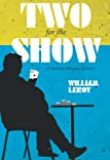
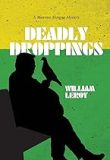
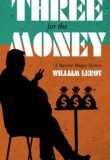
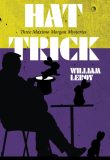
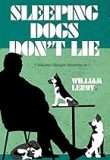
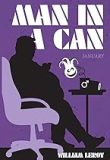
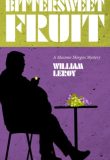
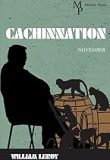
The books shown on the left are by WILLIAM LEROY. Click on the cover to order.
This interview was conducted by Douglas R. Cobb on February 20, 2026.
Douglas Cobb: William, why did you choose to write Cachinnation and Doc In A Box as two separate books, or novellas? I’m not criticizing it, and you make it work, but being an author myself, I was wondering what your thinking was behind the decision.
William LeRoy: The publisher, Mossik Press, claims the double-booking is a printer’s error, but I have my doubts. More likely it’s just another cheap Mossik trick to cut costs and maximize their profits by tricking customers into buying the same volume twice.
Douglas Cobb: In Cachinnation, as well as your other novels, you also include a lot of cool references to popular songs of the past, and to famous literary detectives, among several other topics. I, personally, like reading the tidbits you include, like lines from songs. You also have a keen sense of what human nature is like and how misunderstandings and double entendres can lead some people to jump to conclusions that are often erroneous.
William LeRoy: Based on my own experience, I suspect that songs run through peoples’ heads more or less constantly, and lead to behavior. Since I was a teenager, for instance, I have been afflicted by an earworm from a certain song, to-wit: “Don’t stop telling those lies.” And now that you mention it, Douglas, what else could explain the misunderstandings and double entendres that lead virtually all my characters — not to mention readers — to almost always reach erroneous conclusions?
Douglas Cobb: I, also, occasionally like to combine humor in some of my Westerns and other novels and I think adds some humanity to the characters I write about. So, with this question, you know, let’s get into the technique of writing a little bit. What’s your take on combining humor with some of the conventions of mystery novels? Do you credit this particular style as one of the reasons for your success as an author?
William LeRoy: No. While I myself often laugh uncontrollably as I write, some might say insanely, I regret to say that I have not yet been deemed a successful author. Thanks to the refusal of Mossik Press to put me on national television!
But I’m glad you brought up technique and style of writing inasmuch as I consider myself something of a groundbreaker when it comes to punctuation. For instance, I refuse to bend to convention and robotically put closed quotes at the end of every sentence, though often the marks pertain to a term or single word of a long sentence that may of may not be in quotes. For example: “Douglas was generous with small favors, blah, blah, blah, but was by no means a ‘Santa Claus’.”
Douglas Cobb: Speaking of humor, it seemed to me, while reading Cachinnation, that there are some similarities in regard to how Max Morgan and Possum’s senses of humor are, in part, due to how they have been treated in the past, and all of their lives. Neither one, it seems to me, has ever enjoyed being made the butt of a joke, though, of course who does? Did you base any of the characters in these novellas on anyone you have known in your life?
William LeRoy: Alas, Douglas, as they say: all fiction is fundamentally autobiographical.
Douglas Cobb: My next question focuses on Cachinnation’s main antagonist, Leo Wolfe. Who doesn’t like a good villain, of sorts, right? A sort of Brom Bones to Possum’s Ichabod Crane? But you make him also a human, with a background, explaining, in part, the way his own sense of humor is expressed, though many of his actions and making others the butt of humor is deplorable, kind of like how Brom treats Ichabod in Sleepy Hollow. So, I liked this reference to Irving’s tale very much, but I was wondering if you named Leo Wolfe off of author Rex Stout’s famous sleuth, Nero Wolfe–so, is he? Maybe I’m the one jumping to conclusions, and, of course, Leo Wolfe is not really like Nero, but it’s still cool to make references and pay a bit of homage to previous authors and their characters.
William LeRoy: Can’t say what, if anything, led Leo Wolfe’s parents to name him Leo Wolfe. But otherwise, you are onto me, Douglas. Indeed, Possum McGill and his wife Lil were inspired by the Beatles song, Rocky Raccoon. Indeed, my hope is that someday someone, perhaps a grandchild writing a PhD thesis, will scrounge through my works and find some of the many literary and pop-cultural allusions planted here-and-there like Easter eggs. For instance, though not subtly, Leo describes himself, verbatim, as Willie Loman thought of himself in Death of a Salesman.
Douglas Cobb: William, with my fifth and final question related to your novella, Cachinnation, I will try to word it and my comments about this topic in such a way I don’t reveal any other potential “Spoilers,” though the very nature of the question probably makes that goal kind of impossible, unless care is taken…..
William LeRoy: Spoil away, Douglas.
Douglas Cobb: Would you say, William, that in a way, Cachinnation might be one of Max Morgan’s most successful cases to date? A problem you might have is that to get into exactly WHY it might be one of his most successful cases, you might have to get into details that a person reading the case wouldn’t read about or think about super closely until after reading the tale.
William LeRoy: Almost everyone even while reading, I daresay.
Douglas Cobb: To me, in a way, I’d say that speaking of references, like I did earlier, and speaking about “tales,” of a different sort, IMHO, the tales of Uncle Remus potentially saved the lives of three or four people, because the story could have taken a much more tragic and murderous turn if Morgan hadn’t dressed up like B’rer Bear for Leo Wolfe’s birthday party. It’s a sort of nagging feeling I had as I read the story’s conclusion that Cachinnation wasn’t “merely” a tale about something like how Morgan finally learned to laugh at jokes, but among other things, it was actually his being the only one to wear a costume at the party that was a potential factor in preventing an actual murder from happening. You wrote that Leo didn’t ever carry a gun until the night of his birthday party, so he must have intended to use it, and he shot Possum. And, poison wasn’t put into a cupcake because Lil ran out of sugar, right? Even Max could have risked being shot that night, probably due to his wearing a bear costume. What say you about this topic and about my deductive reasoning?
William LeRoy: I say you, Sir, are brilliant! Too bad you have already earned a PhD.
Douglas Cobb: At last, we come to my questions about Doc In A Box. Many of your popular culture kinds of references in this novella have to do with musicals. I’ve only seen older musicals, ones that have been made into movies, like The Sound of Music, Oliver, Mary Poppins, Oklahoma, Tommy, Cabaret, and others, so, long story sort, I have never seen any of the musicals that you referred to in Doc In A Box, though that didn’t detract me from understanding the reasons why you made the references, so your making the references was still a good artistic way to relate to readers and to move the plot forward.
William LeRoy: Uh huh.
Another way is writing about Morgan watching a show called Case of She Just Snapped with his mom, like it was a “case” they had both worked on over the years. Morgan isn’t stupid, but he does often jump to incorrect conclusions based on incorrect interpretations of the facts. For example, he knows he is going to get a prostate exam, but somehow manages to convince himself there’s some sexual and/or romantic intent involved, and also that he’d had a “near-death experience,” in Doc Sanders’ office by being fed “a possibly fatal dose of Mister Bones.”
William LeRoy: Uh huh.
Douglas Cobb: What does it say about Max Morgan that he is so sexually repressed that he thinks he’s being fed a possibly fatal dose of an ED medication? Does he think the prostate exam is merely an excuse for Candy’s sexual proclivities?
William LeRoy: My God, Douglas, do you not listen to sports talk radio, or watch cable tv news? Nonstop commercials for ED medications have, on the one hand, spawned countless pornographic fantasies in the minds of middle-aged to older males, while at he same time cruelly sowing spread of the underlying cause of the ailment — namely, performance anxiety — that the medications are designed to overcome.
Douglas Cobb: What does Doc Sanders have against big-city hospitals and their building “‘Doc-in-the-Box,’ drive-thru units”?
William LeRoy: Medicos are are monopolists. They make a big deal about, say, the so-called expertise required for taking out a faulty gizzard, thereby stifling competition and jacking up their prices.
Also, Doc Sanders appears to have some concern, for a different reason perhaps than Max, that his wife might be giving men “potentially lethal doses” of some ED medication “without his approval.” How is that, in Doc Sanders’ viewpoint, Candy’s trying to ensure that there is “enough hay in the barn to see herself through an approaching winter season of life”?
William LeRoy: It’s all about billing insurance companies for services rendered, and mark-up. While the doc is bound by his Hypocritical Oath not to wantonly kill patients, his Missus — who runs the practice and is obsessed with stocking hay in the barn — gets a lot of attention from Big Pharma sales reps, including free samples by the boatload and more hams at Christmas than a Subway deli goes through in a year.
Douglas Cobb: I’m sure that your having Max Morgan dress up in a wig and his mom’s clothes is in a comedic tradition of sometimes men dressing in drag, but, it it does show a bit more, psychologically, about the kind of person he is, doesn’t it? Anyway, his attempt to disguise himself doesn’t really fool anyone, right? But, would you please go into why Max feels it’s a good idea, for the sake of the case and to try to prevent a murder from occurring, to dress up in his mom’s old clothes.
William LeRoy: What are you getting at, Cobb? Max lives with his mom, and they are about the same size. What, would you have him shop at women’s boutiques, or probably get arrested in a women’s changing room at Macy’s? While you may not be fooled by his disguises . . . Are you yourself, by chance, a cross-dresser? Not that there’s anything wrong with that.
Douglas Cobb: Thanks so much for agreeing to this interview and to answering a few questions, Mr. Leroy! I have one more question regarding Doc In A Box, and that is, why is Max Morgan kind of annoyed at Doc Sanders’ reaction to his telling the good doctor that Candy “is playing side-pocket in an Okmulgee love nest with her boy toy”? Is it, in part, because the golf course’s “range dame” is Candy’s “almost lookalike sister,” and she makes a play for the doctor, in front of Morgan?
William LeRoy: No. I wouldn’t say Max is so much annoyed as he is frustrated that the doc blames him, the messenger of awful truth as he “says” to himself, private dicking is a thankless task, to which I would add, so is writing pot boilers.
Ⓒ 2022 BestSellersWorld.com | All Rights Reserved | Design + Development by The Unglitch