
Author Interview:
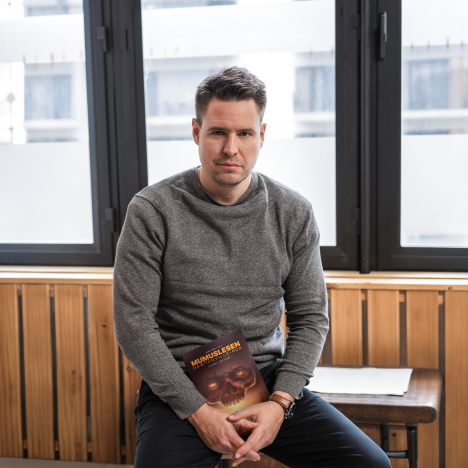
Viktor Csák
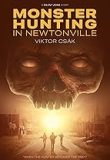
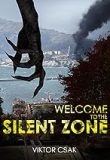
The books shown on the left are by Viktor Csák. Click on the cover to order.
Daniel Ryan Johnson conducted this interview on January 10, 2026.
Daniel: Will the story of the Silent Zone continue in further works, and if so, will we see more of John Debenham?
Viktor: Alongside Monster Hunting in Newtonville, two other shorter stories are in the works before I begin writing the direct sequel, Silent Zone 2. I wanted to introduce not only the setting but also the most important new characters. John Debenham is one of them—he will play not only a prominent but also a very surprising role later on.
Daniel: Why did you choose to set the story in Boston? Do you have a connection to the city?
Viktor: When I was writing the first book, the story of John and the Boston colony served only to make the Silent Zone universe feel more alive. At the same time, this part intrigued many of my readers—despite being just a few pages long, I received a great number of questions about it. The Boston resistance and the Icelandic smugglers had a certain mystique, while remaining very realistic and believable. I realized that I myself wanted to know more about them, so when I decided that Silent Zone would become a pentalogy, John Debenham immediately came to mind. The answer is that simple—almost disillusioningly so—but I have a feeling that it’s often no different for other authors either. Quite often, the most interesting outcomes grow out of such coincidences.
Daniel: With your writing process, do you plan everything out before you begin or just have a rough idea of where you are going when you start writing?
Viktor: I always plan the story arc, and I design the characters in considerable detail as well, but I’ve come to realize that I need to leave something for the moment of writing itself. A precise outline is a good thing, but a detailed “treasure map” can often become a set of shackles for the author. That said, one of my favorite phases of the work is when I have to mold scattered idea fragments into something coherent—when the author is brainstorming with themselves and even they don’t yet know what will ultimately emerge.
Daniel: What books and/or writers most strongly influence your work?
Viktor: Back in high school, there was a Hungarian author who also wrote under an English pen name (Leslie L. Lawrence). I read almost all of the books he had written up to that point—there must have been around seventy, maybe even more. By industry standards they’re considered pulp fiction, but his books were where I first experienced what the page-turner feeling really is—when you simply can’t put a book down. I started analyzing how he achieved that effect, and I was very proud of myself when I managed to break it down and truly understand it. I’ve been using it ever since, in my own way.
Daniel: What was the initial spark that inspired you to create the world of the Silent Zone?
Viktor: I have dozens of ideas that I’d like to turn into books and screenplays one day. Choosing Silent Zone at that moment was simply another coincidence. I started developing it, liked what I saw, and wrote it.
Daniel: Was the plot line with Zoe and Big Betty just about creating orders for John to disobey, or will the problems with the mutants in Revere be expanded upon in a later book?
Viktor: Revere’s, Zoe’s, and Big Betty’s stories have come to an end, and I don’t plan to include them in the upcoming books. In the case of Revere and the mutants in particular, I believe there are certain mysteries that are better left unexplained. They work best when we know very little about them, because that way more and more questions arise in the reader’s mind. Sometimes providing precise answers can actually have the opposite effect.
Daniel: Did Grímur’s men kill off everyone in the boat before anyone else could be infected, or is there the possibility that they will bring the ferals back to Iceland with them?
Viktor: One of the most important questions—one that even I can’t answer yet—is whether the virus managed to escape the quarantined North American continent or not. If I still had to say something at this point, I’d say that Grímur and his crew made it home to Iceland safely. And that they’ll think twice before getting involved in a similar adventure in the future.
Daniel: What made you choose the terms “ghosts” and “ferals” for the monsters in the book?
Viktor: In the first book, I used the word “ferals” because I definitely didn’t want the infected to be referred to as zombies. I tried to avoid echoing the terminology of other, similar books. “Ghosts” is a different matter; there I imagined that some people would naturally use a different kind of slang. An interesting detail is that in Hungarian the term “mumus” (translation: “boogeyman”) is used, but on the recommendation of the translator and the editor, we decided against using that in the English version. They said that in English this word carries a negative undertone, whereas the same was not true in Hungarian. In Hungarian, this word simply means the monster used to scare children.
Daniel: Did you know you were going to write further books in the series when you began writing Welcome to the Silent Zone?
Viktor: No, I had no idea at all. But where I come from, there’s a saying: appetite comes with eating.
Daniel: Do you have a plan in place in the event of a potential “zombie” apocalypse?
Viktor: Yes, I do have plans. I have an excellent relationship with the professionals who are capable of welding together an end-of-the-world truck, like the one Nelson had in the first book.
Daniel: Thanks for graciously agreeing to do this interview with me!