

Author Interview: David A. Ek
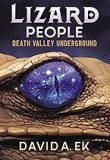
The books shown on the left are by David A. Ek. Click on the cover to order.
Daniel Ryan Johnson conducted this interview on September 27, 2025.
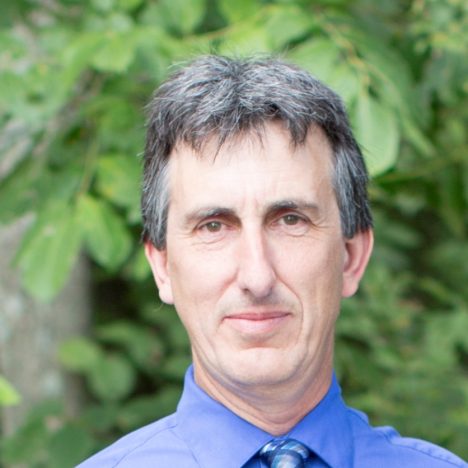
Today I am interviewing author David A. Ek.
Daniel Ryan Johnson: What was the spark of inspiration that got you started writing this novel?
David A. Ek: Years ago, I started writing a nonfiction book on the critical water issues facing the West. I attempted to use a more literary style than is often found while dealing with contemporary political topics. My science background easily handled the science-y elements; however, I discovered I needed to enhance my literary chops to successfully achieve such an ambitious goal. I took a deep dive into literary techniques, learning by trial-and-error. I wrote and submitted scores of short nonfiction essays to literary journals. A few were accepted, but most were rejected. Regardless, my writing improved exponentially.
On choosing topics for these short essays, I drew upon my previous life experiences—including time spent working as the head of science and resource management at Death Valley National Park. While working in this vast desert wilderness, I often stumbled across weird tales, conspiracy-minded eccentrics, and social misfits. I centered one of my nonfiction essays on the wild assortment of eccentric characters that surrounded the Lizard People legend within Death Valley National Park’s Panamint Mountains. The literary journal Weber: The Contemporary West published my essay “Into the Void and We Shall Follow” in the Fall of 2021. However, before I finished, I knew I couldn’t allow this intriguing tale, with so much storytelling potential, to lie still after only one nonfiction short essay. It cried out for elaboration, expansion, and full-length novelization. Lizard People: Death Valley Underground is the entertaining result.
Admittedly, a catalyst for this story was our current social and political environment, filled with crazy conspiracies spiraling out of control. I wanted this fictional world set in the desert wilderness to serve as a subtle and non-intrusive allegory to our real-life world filled with social and political turmoil, suspicions, and wild conspiracies that were spinning out of control and escalating into uncharted realms.
Daniel Ryan Johnson: What is your writing style? Do you carefully plan out every chapter and know where things are going to go when you begin or do you just start writing and see where the story takes you?
David A. Ek: Regrettably, my writing style is fragmented and modular—if these were actual “styles.” I’m impressed by people who can script or outline their fictional narratives sufficiently to develop their novel linearly, or at least, linearly reversed. Famed author John Irving once wrote that he can only keep his stories coherent and organized by writing backwards. He writes the conclusion first, then backs up and writes each preceding section linearly, in reverse order, until he finishes the opening sentence. Only after finishing the introduction does he realize the book’s holistic narrative arc. I admire authors who can be so structured. Conversely, no matter how hard I try, my stories develop non-linearly and modularly. I randomly hop from scene to scene in whatever order the spark of imagination drives me at the time. Only later do I struggle with the non-envious task of piecing these fragments into a seamless and cohesive narrative.
I may have a good notion for a book that eventually turns out to be somewhere in mid-story. I may write and massage this section while remaining unclear where it would go from there, or how we get to that point from any sensical beginning. Late at night, while lying in bed and unable to sleep, I may have an epiphany for an improved ending. I may write and refine the ending, despite not fully understanding how the mid-section and ending sections will eventually connect. Another early morning epiphany may provide clarity on how to open the story. However, once I connect the introduction with the well-crafted mid-section, I may realize that the already written ending simply won’t smoothly connect. I then mark all rough spots and incongruent transitions for later reflection. Slowly, over the course of thousands of hours of in-depth pondering and new epiphanies that may crop up out of nowhere, my book comes together. Time to reflect and let the story gestate in my head proves critical. This is why notions of writing X number of words a day are meaningless to me. I may write five thousand words a day for several days straight, but I would need to let those words gestate in my head for days or months before I realize what worked and what didn’t. Time and distance are more valuable to me than if I had simply continued uninterrupted writing five thousand words per day. Massage and edit, edit and massage, scrap and re-arrange, massage and edit, reflect, and then slowly refine until I reach a point that I sense the piece is finished. I wouldn’t recommend this process to anyone, but so far, it is the only approach that works for me.
Daniel Ryan Johnson: Did you have a favorite character to write about?
David A. Ek: I never thought along these lines. However, if pinned down, I would likely admit to especially having enjoyed writing about the crystal-worshiping technocrats. Talented individuals who may have succeeded in life if they had chosen different paths or hadn’t fallen victim to society’s darker undercurrents. I also especially enjoyed developing Billy Torgerson’s narrative arc. He was likely the least flawed of all the characters. He became a victim of circumstances, mostly initiated and perpetuated by others.
Daniel Ryan Johnson: Were you strongly influenced by any specific books or writers?
David A. Ek: In the development of Lizard People: Death Valley Underground, I intentionally studied masters in what I call layering. Annie Dillard’s Pilgrim at Tinker Creek greatly inspired my writing. However, I originally thought this Pulitzer Prize-winning book was just a very well-written essay on her nature observations along this nondescript suburban Virginia stream. Later, I became profoundly moved when I read in the book’s Afterword that Dillard’s purpose for writing the book was to explore Neoplatonic Christianity’s belief that there are two routes to God: via positiva and via negativa. Despite enjoying the book, I had no idea it contained other levels, or understanding, at any level, of the nature of via positiva or via negativa. Since then, I have spent days and years wrapping my head around the notion that good stories can contain multiple levels. These thoughts also brought me back to Herman Melville’s Moby-Dick. For decades, people have been enjoying this novel as merely an engaging adventure. However, others have delved into the story’s many symbolisms. Does the whale represent God? If so, then the novel is accessible for people who devour stories with more subtle philosophical undercurrents. Layers. A book with multiple layers may be enjoyed and appreciated at whatever layer the reader desires.
Ernest Hemingway’s The Snows of Kilimanjaro also greatly influenced my writing of Lizard People: Death Valley Underground. Critics have marveled at Hemingway’s ability to only hint at behind-the-scenes drama or a character’s life-changing moments without bogging the story down with unneeded details or explanations. He introduced characters’ troubled pasts with only a few hints and nondescript dialogue and action. The critics say that his hints were more than sufficient to show that the character was troubled, without having to provide unneeded details, background, or explanation. Additionally, with only subtle hints, the reader can add their own relevant richness to the story in a much more meaningful and engaging way than if the author had hand-walked them through the detailed background maze step-by-step.
I also drew inspiration from other authors in how their landscape descriptions added additional colors and hues to the story’s layers. I loved how Tony Hillerman wove real-life nonfiction elements of the Navajo landscape, as if their intriguing homeland was a separate and distinct character. Edward Abbey did the same for the red-rocked canyon country of the Colorado Plateau. As I developed Lizard People: Death Valley Underground, I kept these Dillard, Melville, Hemingway, Abbey, and Hillerman lessons close at hand and close at heart.
Daniel Ryan Johnson: Many of the characters in the book have some pretty wild ideas about the world. Did you heavily research all the details of these varied conspiracies, or did you invent some of these details yourself?
David A. Ek: As the old saying goes, truth is often stranger than fiction. While all aspects of the murder, kidnapping, and search for Sid are fictional and entirely fabricated in my mind. I drew inspiration from the very real, quirky, and off-centered characters that I encountered while living in the Death Valley region. Some people seriously believe their hand-made resinous globules interrupt the rumored signals between power-hungry government officials and a race of shape-shifting reptilians living in local underground chambers. I met a person who believed that he invented a contraption that could detect dead bodies that would be useful in his quest to find additional Charles Manson victims. He, too, requested the sheriff’s assistance in crowd control.
It was not uncommon to find mysterious ceremonial shrines left by unseen and unknown Manson followers at the site where police had caught up with him. His followers may be few, but the Manson legend hangs over the Panamints as surely as a heat inversion layer hanging over Death Valley’s Badwater Basin in July.
The odd conversation that took place in the book between Katherine and the international ant expert who came to Death Valley to dry out from an especially wet scientific expedition in Borneo was nearly verbatim with a chance encounter conversation that I had in the high Panamints with an internationally recognized ant expert who swung by Death Valley to dry out from an ant scientific expedition in Borneo.
As my book highlights, the first documentation of the Lizard People legend began generations ago in Los Angeles. Lizard People: Death Valley Underground remained true to these legends; however, I added to and augmented them to provide a more well-rounded history that better connects with other story elements.
While developing Lizard People: Death Valley Underground, I blended fiction and fictionalized versions of nonfictional events in a way that not only adds authenticity to the novel but is one more layer within this multi-layered fictional story set within the intriguing Death Valley environment. All the places described in the book are real, as are the area’s natural and cultural histories. Just as Melville incorporated his real whaling experiences into Moby-Dick, and Hillerman described real Navajo cultural ceremonies into his novels, I sought to bring the same level of authenticity to my fictional world that I created in Lizard People: Death Valley Underground. I gathered my experiences and observations from my Death Valley days and wrapped and massaged them into an entirely fictional story and experience.
Daniel Ryan Johnson: Why did Lizard Len lie about meeting Sid when he apparently didn’t have any involvement the kidnapping?
David A. Ek: I purposely avoided having my characters appear too one-dimensional. In real life, good people have evil thoughts, and evil people have sparks of kindness and gentleness. I wanted my flawed and conflicted characters to be multi-faceted. As such, conflicted characters perform conflicted actions. Like what I said earlier about The Snows of Kilimanjaro, critics have said Hemingway’s characters were enhanced by Hemingway not providing all the details of the characters’ conflicted past. Besides, who can really explain why the conflicted are conflicted? As the author, even if I had an explanation for Lizard Len’s conflictions and contradictions, I didn’t feel the story would be enhanced by my digressing with additional detailed explanations.
Daniel Ryan Johnson: Were medicine wheels a particular interest of yours before you began writing the novel?
David A. Ek: Yes, very much so. I strongly believe that I must bring a strong sense of authenticity to my writings. As such, I have conducted extensive research on the topic—both in the archives and in the field. As an aside, the part within Lizard People: Death Valley Underground where the person searches for a specific medicine wheel only to find that it had been destroyed by a recent petroleum well pad was closely patterned after a personal experience I had while searching for a lesser-known medicine wheel in Montana. During my medicine wheel research, I was amazed by how many close parallels there are between conspiratorialists’ speculations on their mysterious origins and those of ancient alien visitors. These parallels begged me to wrap medicine wheel legends and mythos into my Lizard People story.
Daniel Ryan Johnson: Why did you choose to keep all of Paddy’s secrets from the audience and not just from Katherine? What happened with Jen and Rachel and why did Paddy hate Nick?
David A. Ek: For the same reasons that I didn’t provide explanatory details for Lizard Len. Some side mysteries can remain mysteries. Back to medicine wheels, there are medicine wheel mysteries that may best remain mysterious. However, I provided enough subtle hints and casual threads to provide the most logical explanation of what happened to Jen and Rachel and what created Paddy’s biggest demon. However, I purposefully kept these explanations subtle and understated. Perhaps interested readers may want to read the book a second time to connect all the dots. I also envisioned Lizard People: Death Valley Underground to be a good book for book club discussions. In places, I provided enough details to logically support multiple conclusions, based upon the reader’s worldview. I would be extremely happy if book clubs took on these discussions and came up with their own ideas on the matter.
Daniel Ryan Johnson: Why did Paddy disappear without a trace?
David A. Ek: This reminds me of my wife’s opinion of the book. She greatly enjoyed the story, but it unsettled her because she likes happy endings. For this story, a happy ending with all the ends tied neatly in a bow, in my opinion, would have ruined the story. In real life, flawed, broken people do not suddenly heal and go happily and carefree into the sunset. At best, broken and flawed people slowly learn how to manage their demons in a way that they can carry on one day at a time. In Paddy’s case, his return to his normal society will be a long and painful process, complete with baby-steps and abrupt backslides. His growing relationship with Katherine helped him claw his way back to resolve his inner demons, but I strongly felt that for him to resolve them so completely that he and Katherine could ride off into the happy sunset was too unrealistic and too one-dimensional. My take on it is that he had been coming back faster than he could process or handle. As such, he backslid and disappeared. This mysterious backsliding would be consistent with the recovery of a flawed person and further adds mystery to this multi-faceted world of Death Valley’s underbelly.
Daniel Ryan Johnson: Are you one of the Lizard People?
David A. Ek: Anthropologists have long attempted to expunge the notion that modern humans have any direct connections to our Neanderthal ancestors. However, throughout the countless eons since the first Neanderthal and Cro Magnon began interacting and interbreeding with each other, notions of a clear impregnable wall between these two humanoids defy logic. Despite this resistance, recent studies have confirmed that there are traces of Neanderthal DNA in all modern humans. Considering new understandings for these humanoids, that defy accepted conventions, no one, including me, can definitively say who or what percentage of ancient Lizard People DNA lies buried in any one of us, or when that relic genetic code may suddenly rise from within and take over. That story arc may have to wait for the sequel.
Daniel Ryan Johnson: Thanks for graciously agreeing to do this interview with me!