Reviewed by Ephantus Gold
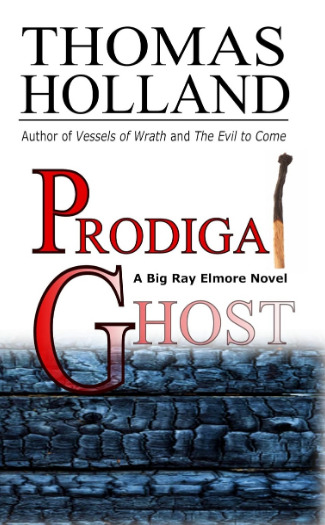
“Prodigal Ghost: A Big Ray Elmore Novel” by Thomas D. Holland is a Southern murder mystery set in Split Tree, a small Arkansas town. It follows Chief of Police Big Ray Elmore as he tries to uncover the identity of a stranger who rolls into town claiming to be the long-dead son of Boy and Elizabeth Crawford, an elderly couple found dead after a suspicious fire engulfs their house. Purchase Here.
Joe Darby had a serious falling out with his father right before he left home- never to return. He’s been a ghost in the town’s memory for over three decades, even among people who knew his family. Until now. Sheriff Ben Cooper thinks he saw the young man recently. Several other residents quickly confirm his claim. Big Ray, however, thinks the timing is too perfect. He knows that Darby died in WWII. The military confirmed it. As he begins looking into him, he learns, to his shock, that the mystery man knows about him. The man also visited the town’s library, specifically looking for books about families. Nothing about him makes sense. To Big Ray, it all reeks of a setup.
Meanwhile, Big Ray is facing an accusation by the feds that he beat up a Black preacher. If he’s arrested or suspended, he can’t work the Crawford’s case. His friend, the city’s attorney, buys him a week to investigate the fire. He thinks the worst that can happen to Big Ray is losing his job. He’s, however, working with incomplete information. Big Ray is already in the crosshairs of people willing to do anything to get what they want. The week feels like a lifeline. But it’s also a countdown. It’s short, but Ray’s enemies have been waiting longer.
“Prodigal Ghost” is a slow-burn that takes its time. It doesn’t hit the gas on page one. Instead, it lets its protagonist sit on his porch, rambling and telling you about his bad leg. He’s not just a detective; he’s a storyteller, too. His voice moves at the speed of the small town, a town where nothing happens fast. He inquires like he’s genuinely in the dark. He lets people talk. His questions build the novel’s world. We learn about the town, the history, and the culture.
The mystery isn’t aggressively concealed. The clues are there. But the concealment isn’t in what’s hidden. It’s in what everybody’s too comfortable to see. That’s not just clever plotting; it’s the kind of storytelling that indicts and leaves the reader complicit, because they, too, were too comfortable to look closer.
One of the novel’s most outstanding elements is its use of death as a frame. It opens with death and closes with a burial. This approach inverts the genre’s usual structure, where a resolution usually closes the book. “Prodigal Ghost” doesn’t do that. It ends with a funeral. And that’s what makes it so relatable. Life often ends with the people left behind holding a photograph of someone they could have paid more attention to, trying to make sense of what just happened. That’s what makes “Prodigal Ghost” hit so hard – its honest portrayal of how the world really works.