


Author Interview: Michael Pronko

This interview was conducted by Timea Barabas on November 18, 2025.
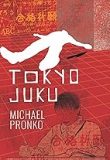
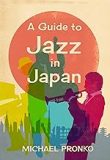
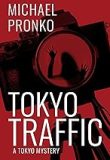
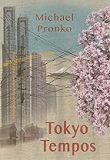
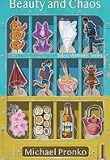
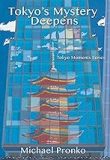
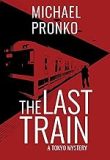
Books on the left are by Michael Pronko. Click on the book cover to purchase.
Timea Barabas: Tokyo Juku is the seventh book in The Detective Hiroshi Series. How did it all begin?
Michael Pronko: It was a natural evolution from my writing and teaching. I teach American literature, so I’m constantly outlining the novels and films that I work on with my students. I was also writing editorials for The Japan Times for a dozen years. Those required a significant amount of time to research and consider issues in Japanese society, and to condense those thoughts into less than 800 words a week. The word limit was the painful part. I was also writing about Tokyo for Newsweek Japan, about what I found interesting or unique about life here. So, those three threads of my working and writing life finally braided together into writing a detective novel. It was as easy—or rather, as difficult—as that.
Timea Barabas: As a prolific writer working across multiple genres, could you describe your writing process?
Michael Pronko: When my feet hit the tatami mat in my writing room, it flips a switch, and that’s writing time. I also have an office at my university, where I write from time to time, with a beautiful view of the city. My daily two hours of commuting is a lot of time for incubating ideas, rejecting some, and fleshing out others. I jot down notes (by hand in a small paper notebook) and am good to go once I get my fingers back on the keyboard. After working for newspapers and magazines for twenty years, I became pretty comfortable writing whenever and wherever—between classes, during a faculty meeting, over lunch, or even in the middle of a busy train station. As for editing, which is probably more than half of writing for me, I rewrite with a pen on paper as many times as I can stand it. Then, I type in the changes, print them out, and repeat the process. When I get down to putting in a comma, taking it out, and putting it back in the same place, I know I’m about done.
Timea Barabas: What were the easiest and most difficult parts of writing Tokyo Juku?
Michael Pronko: It was challenging to condense my years of teaching in Japan. I would have long rants in my head, but who wants to read that? I had to condense all that into the relevant points that fit the characters, rather than cramming complaints into their heads and forcing them to parrot my words. Some news reports about the education system are unbelievable sometimes. I had to ignore them to keep the story grounded in believability. Also, most of the others in the series have been whydunnits, but this time I wanted to do a real whodunnit. Finding the balance of clues, revelations, and misdirection without ruining the ending was a challenging task. For that, I watched a lot of Penn and Teller’s “Fool Us” to learn ways of keeping the story in plain view without revealing the secret. A mystery or detective novel uses techniques similar to those of magicians.
Timea Barabas: Your fiction appears to be infused with elements of your personal experience. How do you draw from your own life without allowing it to overshadow the story’s fictional intent?
Michael Pronko: The setting of Japanese education in Tokyo Juku was very close to my own experience, but I wanted it to be about one student and other teachers, not about me. I can save my experience for some future first-person memoir, if I ever get to it. It’s humbling to live in a vast city. I have my point of view, but there are millions of others all around me. For Tokyo Juku, I had to filter out my own experiences, or maybe find the right lens to capture them. My own experience might have provided some of the raw material, but it’s transformed in the telling, like clay turned into pottery on a wheel. In other words, the story came first; I came second. The plot of this detective novel grows increasingly complex, yet you manage to maintain control. How do you organise such intricate storytelling?
The details can overwhelm the story if you’re not careful. Or in my case, if I don’t edit out a lot of distractions. It can be challenging to follow Japanese films and television dramas, as they often include numerous subplots and subtle nuances. I sometimes can’t keep up. Watching multi-layered, multi-thread narratives is good practice, though. Practically speaking, I outline, re-outline, and re-re-outline to be sure everything connects. I think readers are intelligent, so they can absorb a lot of complexity if the forward momentum doesn’t slow. If the pace of the story remains quick, everything else falls into place. If you focus on the overall flow, it’s a simple story, but if you stop to look at the details, it’s complex. The dual viewpoints of Hiroshi, as the detective, and Mana, as the student, each running their own investigation, propel the story beyond the details to the ending.
Timea Barabas: What advice can you give on creating self-sufficient characters?
Michael Pronko: I usually overwrite, then cut a lot. The cuts I keep, hoarding fragments and details in notes and saved documents. Even if I don’t use them, they’re in my mind and contribute, sometimes just a little, to the characters’ decisions, thoughts, and actions. Those extra unused bits and pieces help fill out the characters’ fullness and self-sufficiency. It’s as if sensing their completeness requires no need to articulate it explicitly. I like self-sufficient people, too, so that helps to write them. It’s also a kind of respect. I feel that in daily life, too, when I’m talking with people, there’s always more to their story that I can’t see or guess, but I feel sure is there. In real life, if you wait for the telling detail or striking word, you can see more in people. If you write from that understanding, the characters have more complexity and depth to them.
Timea Barabas: The murder investigation serves as a backdrop to highlight some of the darker corners of the Japanese education system. As a professor, have these issues influenced or impacted your own academic career?
Michael Pronko: I’m in it but not of it, I’d like to think. I’ve never taught at a juku cram school, the setting for the novel, but I have heard many stories, good and bad, from my students about studying for the entrance exam. I’ve worked on committees and contributed to the entrance exam at my university. I contributed to some exam study guides and wrote textbooks. The examination system affects every aspect of society. High school too often teaches to the test, and college reels from the effects of that. It’s not easy to establish education as a holistic and humanistic endeavor when it has been reduced to multiple-choice testing. Some students navigate the system quite well, but many don’t. It’s not that it’s impacted me negatively over the years, but it’s certainly irritated me. Many powerful forces have a vested interest in maintaining the status quo. Everyone wants to stay in business. Everyone likes their comfy position. The education system affects everyone powerfully.
Timea Barabas: What keeps bringing you back to Detective Hiroshi?
Michael Pronko: He has the kind of good sense I wish I had myself. I wasn’t sure I’d continue with him after the first couple of novels, but readers really liked him, so I kept bringing him back. In a way, he’s a good lens through which to see the city and its problems. He knows a little about a lot of things, and having trained as a forensic accountant, he can tap into his peripheral knowledge, financial insight, and intuition to work the cases. Hiroshi can’t do it alone, though. His colleagues, ex-sumo wrestler Sakaguchi and ends-justify-means Takamatsu, are also important. So, going back to Hiroshi is also going back to those two other detectives. With the arrival of several female detectives to the department, Hiroshi can work with all of them. He’s the central dynamic pulling them all together. I want to do some prequels with Takamatsu and a related novel that focuses on Sakaguchi. But for now, Hiroshi is the guiding force.’
Timea Barabas: Now a seven-book series, how do you keep a detective series engaging and evolving across so many installments?
Michael Pronko: I had to take a break after book six to mull over that very question. A series can lose force or redo the same story, but I also want to make each of the books readable as a standalone. It’s maybe more interesting to read them in order, but it’s not necessary. However, I believe that everyone evolves, and so should fictional characters. Tokyo, too, continues to grow and change, so it’s unlikely I’d run out of interesting parts of this at times overwhelming city. As for crime, there’s plenty of that left to engage, sadly. I consciously try to imbue each book in the series with a sense of freshness and endless possibility, like Tokyo, and like people have.
Timea Barabas: Can you tell us anything about what might come next for Detective Hiroshi, both in his personal and professional life?
Michael Pronko: He’s having a baby with his girlfriend, so that’ll determine a fair bit of what happens next. He’s considering moving to his uncle’s accounting firm, so we’ll see what he decides about that, and why. The next installment in the series will examine the tourism boom in Japan. And the homicide department is evolving, too. A glance at my notes for the next one shows there are a lot of things coming up for Hiroshi.
Timea Barabas: Thank you for agreeing to do this interview with me.
More reviews and awards can be found at:
Visit Author’s Websites at:
https://www.michaelpronko.com/
Thanks for visiting!
Ⓒ 2022 BestSellersWorld.com | All Rights Reserved | Design + Development by The Unglitch