Reviewed by Rahul Gaur
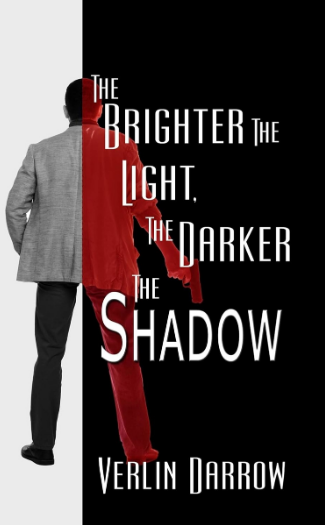
Long before this book, Carl Jung famously said, “The brighter the light, the darker the shadow.” This means that we all have a light side and a shadow. When something becomes more intense or prominent, its opposite also becomes more pronounced. This book is about what happens when both are exposed. Purchase Here.
The Brighter the Light, the Darker the Shadow by Verlin Darrow takes place in the Santa Cruz mountains, where spiritual leader Kade Tobin leads a small spiritual community called the Brethren of Congruence. They want peace and to live in harmony with life. But everything changes when Kade’s dog finds a dead woman near his home. Soon, this peaceful retreat becomes the site of multiple murders.
As the story progresses, different characters are introduced whose lives intertwine. Each character comes with their own set of complexities and acts from their backstories. Trauma shapes behavior. Ambition shapes judgment. Fear shapes accusations. The good thing is the book doesn’t label anyone good (bright) or bad (dark). It just showcases human beings’ reality. The community is full of regular people with problems. This is evident in characters like Jim, Martha, Susan, and Wayne. Then there is Detective Bill Cullen, who shows some interest in Kade’s philosophy. Other cops, like Jeff McCall and Michael Quinn, treat the community like a cult. The DA, Marion Burke, has personal reasons to go hard on Kade. Her daughter, Susan, lives in the community. Every character plays an important role in the story progression.
The Brighter the Light, the Darker the Shadow explores the clash of identity and power. Kade believes people suffer when they fight reality instead of accepting it. When the police arrest him for murder, his belief faces a real test. Some officers push hard during questioning. They try to scare Kade. The prosecution uses weak witnesses. This tussle is shown beautifully, and some descriptions are outstanding. One example is the moment Cullen receives the preliminary forensic report: it identifies the victim as a fit, fair-skinned Caucasian woman in her early twenties, shot at close range with a large caliber handgun sometime between 2 and 4 AM. Another is Cullen’s sharp, methodical way of cornering liars during his interview rounds.
The second half happens in court. The court system does not look fair. The judge is biased. Kade is stuck in jail, but he makes friends with a gang leader for protection. However, the pace drops during court scenes and jail reflections. But this seems intentional. It wants us to think about how belief systems work under pressure.
The author’s main argument is clear. The more someone shines, the more they attract doubt and attack. Light creates shadow. Life is not a straight line or just yes or no. There is a greyish area with lots of ups and downs. Kade is not perfect, and his spiritual authority makes him a target. He also lives in the U.S. without legal status and hides that truth. That is part of his shadow. The legal system sees facts and records. Kade sees meaning and lessons. These two views clash throughout the novel.
This is a solid story. It has suspense, court drama, and real thoughts about life and justice. The clever tricks and character ties make it fun to read. If you like mysteries with deeper meaning, pick this one up.