Reviewed by Lily Andrews
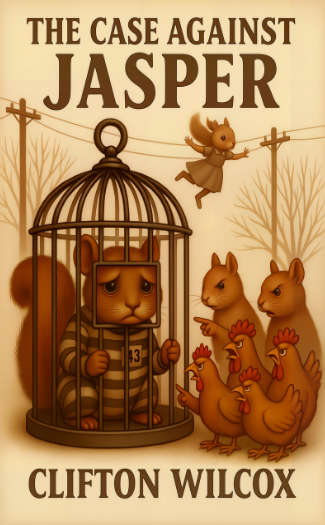
“The Case Against Jasper” by Clifton Wilcox takes us right into the Wildwoods Farm, where rumors are running wild and trust hangs by a thread, in one of the most chilling tales of deception vs. truth you’ll ever encounter. There, “A scream, a slip…” becomes the spark that sends little Jasper on a desperate journey for answers that no one dares to speak aloud. Purchase Here.
Jasper and Jenny are enjoying their favorite game when the latter suddenly hits the ground with a thud that no creature can ever forget. In a short while, accusations fill the air that Jasper deliberately shoved her. “He could never compete with Jenny, and he loathed that…” they say. Invited by the elder of the farm, enters Ink, a clever ferret detective with a quick wit and a keen eye for details, and Fiona, “The Whisper,” whose reputation for her uncanny ability to pick up on cues and to overhear whispers and quiet conversations precedes her. Eager not to let the whispers write the ending, the duo sets out to untangle the rumors. But little do they know that the truth is darker and far closer than anyone dares to imagine.
What follows is a walk down a detective’s journey. Ink and Fiona are not just following what everyone is saying; instead, they are looking into what one can easily overlook, including non-verbal cues of their suspects —the pause before a name, a shaky voice, the nervous flick of a tail. At the farm, looking the other way is the path of least resistance that may keep them safe and liked. Their choice here becomes the story’s moral heartbeat and Wilcox’s belief that justice is not found in consensus but in courage.
In “The Case Against Jasper,” one senses early into the read that the animal characters are not simply personalities but moral instruments, with each of them embodying a distinct attitude towards fear, truth, and justice. Each of them represents a recognizable human tendency, including innocence, idealism, moral laziness, and reason and empathy. By giving them these human traits, Wilcox frees the story from direct human context, allowing the reader to examine moral failure in its purest form. He has also given them distinct behavioral language, which enables the reader to learn who they are by how they sound and react, not just by what they say. Of worthy note is how he allows the characters to change throuh understanding, a quality that elevates the book, distinct from a mere fable, and far less cynical than popular ‘Animal Farm’ stories.
Wilcox has written with a measured, lyrical precision that feels timeless. His sentences unfold with the rhythm of oral storytelling that is clear enough for young readers, yet layered enough to engage adults looking for reflection and allegory. His tone is morally charged, inviting contemplation rather than shock even in moments of tension. Fans of reflective mysteries as well as those who enjoy gentle yet profound storytelling will resonate most with his style. Whether approached as a fable, a mystery, or a mirror held up to our own worlds, “The Case Against Jasper” will leave its audience with a lasting sense of the foundations upon which justice stands.