Long Lost Midwife

Long Lost Midwife by Skye Smith

Reviewed by Timea Barabas

Skye Smith’s Long Lost Midwife offers a captivating exploration of life’s winding path. Set in the 1930s, the novel blends a journey of self-discovery with sharp societal critique. While it may be tempting to interpret the story through a modern perspective, it’s important to approach it within the context of its own time.  Purchase Here.

We first meet Franklin and Pamela Dorset just after their wedding, when they are settling into their much-admired home and enviable lifestyle. As they embark on their honeymoon across Europe, however, cracks begin to show in their new marriage. Both are learning who the other truly is, pushing against each other’s comfort zones in the process.

Their travels are shadowed not only by the strains of their relationship but also by the growing political unrest in Europe, a subject that weighs heavily on Franklin. He eagerly seeks conversation about world affairs, yet finds little engagement from his new wife, who is reluctant to enter such debates. Pamela also shows hesitation when it comes to physical intimacy, further testing the foundation of their young union.

After their return, Franklin and Pamela continue working on their relationship, which eventually bears fruit when Pamela becomes pregnant. While the entire family urges her to deliver in a hospital under the care of trained medical professionals, Pamela is haunted by a distant memory.

She recalls Miss Minnie, the woman who not only brought her and her sister into the world but also cared for them as small children. Instead of the cold, sterile atmosphere of a hospital, Pamela longs to give birth as she was born: at home, surrounded by warmth and compassion.

While Long Lost Midwife begins as a story about navigating the challenges of early married life (set against the backdrop of looming global political unrest), it quickly shifts its focus to a deeper, more complex exploration of racial segregation and evolving societal norms.

Pamela’s husband and family are firmly opposed to the idea of a home birth, especially one attended by a woman of color. Despite her wishes, Pamela finds she has little say in the decision. To her relatives, allowing two Black women to help with household duties is already considered an eccentric indulgence.

Yet Pamela cannot escape the tender pull of her memories with Miss Minnie. Compelled by a force she can hardly name, she makes repeated attempts to reach out to her. Once their paths finally cross, Pamela begins to unravel the deep ties binding their lives and the lasting consequences they carry.

As she learns more about this complex, enigmatic woman, long-buried family secrets come to light, secrets that will forever alter her understanding of herself and her world. Then, in an unexpected turn, the novel shifts into a gripping murder mystery.

Because of its mature themes, Long Lost Midwife is best suited for adult readers. It sparks meaningful conversations on a wide range of issues and, though set in the 1930s, its themes remain strikingly relevant today. Covering subjects such as sexuality, gender roles, racial dynamics, and societal taboos, the story offers something that will resonate with a broad and diverse audience.

View the Trailer for Long Lost Midwife

A National Park Love Story

A National Park Love Story: 63 Parks, 15 Years, One Dream by Chris Truxell and Jeff Crum

Reviewed by Matthew McCarty

America’s national parks are full of breathtaking awe and wonder. The amazing views, natural scenery, and awesome experiences make national parks a great place to form friendships, meet new people, and even fall in love. Authors Chris Truxell and Jeff Crum use their commitment to visiting America’s national parks to strengthen their bond with each other.  A National Park Love Story: 63 Parks, 15 Years, One Dream (Self-published, 2025, 346 pages) is the chronicle of the authors’ desire to experience the world around them and each other through visits to the national parks. A National Park Love Story is an enjoyable read that reflects the authors’ desire to share their relationship and their world with the reader.  Purchase Here.

America’s national parks are a great place to rest, relax, reflect on, and contemplate the world of Mother Nature. Chris and Jeff decide to explore all 63 national parks to understand what their life together is about and how the struggles of emerging from two toxic marriages can sometimes overwhelm people simply looking to find someone to spend time with. A National Park Love Story underscores the importance of understanding just how complicated relationships can be. Their commitment to recovering from their pasts and to sharing that recovery with the reader is the foundational element that makes this a good story. Their nonjudgmental view of life and of the baggage of creating a new family from the broken parts of others helps carry A National Park Love Story to the finish line.

Books like A National Park Love Story tend not to pique this reviewer’s interest. These books are usually found to have too much detail that does not support the overall story. However, this story was different. A National Park Love Story was written to illustrate the idea that family and relationships are an ever-evolving work in progress. Relationships are not perfect and require the kind of effort that is almost superhuman to maintain. Chris and Jeff are open and honest about their struggles and how their life together is not viewed through rose-colored glasses.

A National Park Love Story is a well-written story that anyone who has been through trauma and the renewed energy of hope and relationships can sympathize with and identify with. The narrative flows easily and reads like a novel of hope and sacrifice. The language is simplistic and engaging. A reader looking for an engrossing nonfiction journey would do well to read A National Park Love Story. This reviewer enjoyed it immensely.


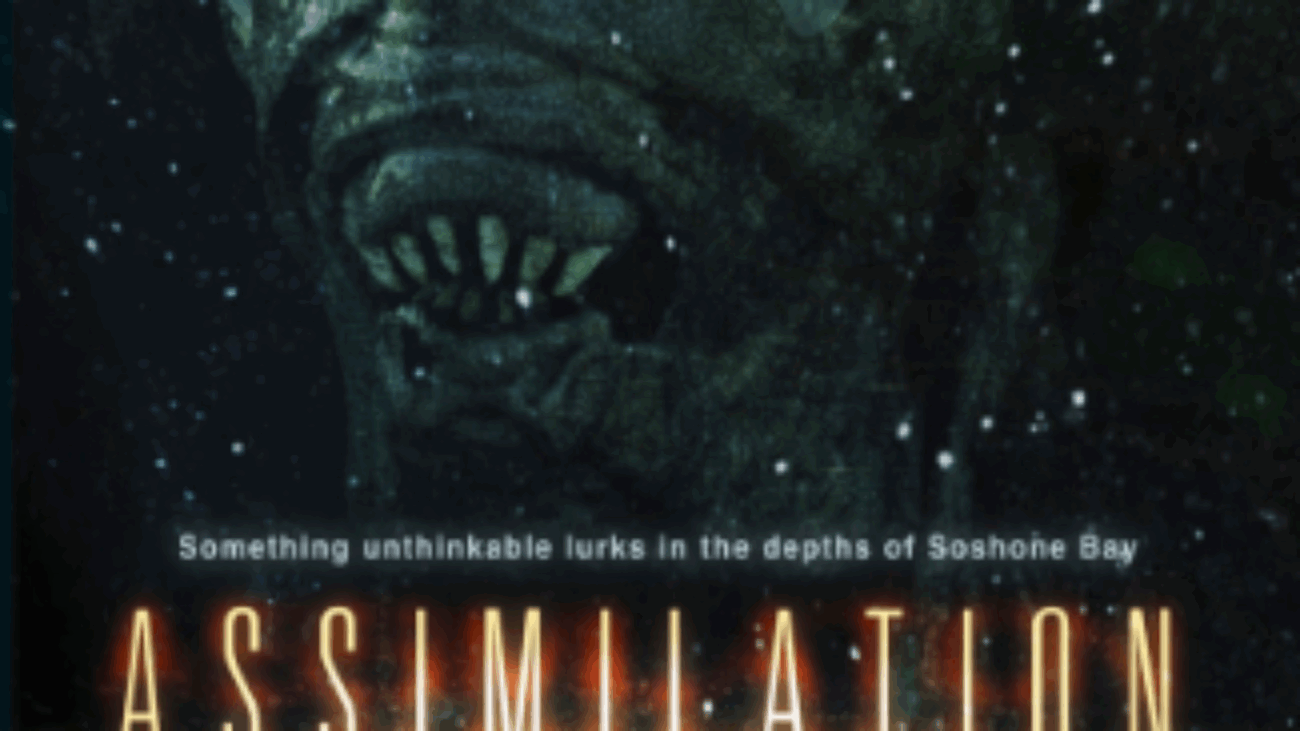
Assimilation

Assimilation by Lonnie Busch

Reviewed by Jacquelyn Tolksdorf

As the book introduces us to Kercy — a wheelchair-bound teen surrounded by her wealthy but dysfunctional parents in an isolated Canadian cottage it winds its way from in a ‘close encounter’ thriller that bends into a Sci-Fi epic of alien experiments and violation. Kercy is visited by subterranean amphibious creatures in her bedroom. When she wakes up the next day bleeding her mother just shrugs it off as menstruation. The next day her father disappears on the lake. Compounding a severe sexual trauma she must stow away in her psyche so she can process her father’s disappearance.  Purchase Here.

Ironically as Kercy grows stronger physically of her disability and mentally into academia – she pursues a PhD; in Anthropology seeking the understanding of how humans behave. And after way into her adulthood she returns to the cabin after her mother’s death with her boyfriend to have memories and revolutions “flood” back to her.

And as the title suggests, as more revelations come to Kercy – will she assimilate with the beings from her haunting past and join them in the bay by the cabin?

The conclusion of ASSIMILATION by Lonnie Busch is a haunting, ambiguous ending that merges the novel’s themes of transformation, identity, and connection between human…and alien life.  It suggests that assimilation is not conquest but evolution: a merging of species, consciousness, and identity, blurring the line between human and alien, science and myth, self and other.

In essence, ASSIMILATION closes on the idea that survival—and perhaps salvation—lies in surrendering the illusion of human dominance and embracing connection, however terrifying or unfamiliar it may be. The novel intertwines themes of alien contact, bodily transformation, parental betrayal, and identity. It reads as both a coming-of-age horror story and a meditation on what it means to be human—to evolve, assimilate, and survive when one’s very nature is in question.

Cargo Hold 4

Cargo Hold 4 by Lonnie Busch

Reviewed by Douglas R. Cobb

Cargo Hold 4 is a Science Fiction/Horror novel by Lonnie Busch that takes the old trope of a stowaway aboard your spaceship to a different level. Perhaps the most famous example of having a stowaway aboard one’s spaceship in a Science Fiction movie is Alien. In literature and in movies, the trope of having a stowaway aboard a ship or even a train is a time-honored one.  As with using any trope, it’s what an author does within the framework of one that attracts and holds the attention of the reader or fails to so. If you are a fan of the Science Fiction genre, I’d highly recommend that you check out Cargo Hold 4, a book that plays within the framework and also one that held my attention from the very beginning to the end.  Purchase Here.

I don’t want to mention many spoilers, but it’s not a very big one to say that there’s a stowaway aboard the Gretel, the spaceship of interest in Cargo Hold 4. The woman commanding the Gretel is Captain Desna and Berlin is the spaceship’s First Mate. One twist here is that the rather noisy and troublesome stowaway is somehow not an organic being. According to the book’s very first paragraph:

“Everything they’d discovered on Planet J–S was stored in Cargo Hold 4, but none of it was organic, according to their scanners.”

I won’t give away how Busch deals with this issue. My desire to read how this could happen was one of the things that made me want to keep on reading, so I don’t want to ruin anybody else’s pleasure. Suffice it to say that Busch’s solution to this apparent problem of a nonorganic stowaway aboard the Gretel was a pretty cool one.

One of the other problems Captain Desna and her crew is confronted with is the ethical one of deciding exactly what should be done about the irksome stowaway.  Two of the other things making life difficult for Desna, Berlin, and everyone else aboard the Gretel include the necessity of their handling an unplanned spacewalk and also how they should attempt to dislodge the unwelcome alien that had stowed away in Cargo Hold 4.

I asked myself as I read Cargo Hold 4 questions like: “is the book’s plot fast-paced?” “Are the complications that Captain Desna and her crew have to deal with dealt with in a realistic way?” and “Does Cargo Hold 4 have a plot that holds my interest and keeps me want to keep on reading it?”

I’m glad I read Cargo Hold 4. Besides being a captivating, page-turning Sci-Fi/Horror thriller, I liked reading the book for the added reason of discovering how the book’s author, Lonnie Busch, came up with inventive ways to play within the confines of the stowaway trope. I highly recommend Cargo Hold 4 for anyone who enjoys reading intelligent, fast-paced examples of the Sci-Fi/ Horror genre. Check it out today!

First Place: Mystery/Thriller/Horror/Suspense
Second Place: Science Fiction
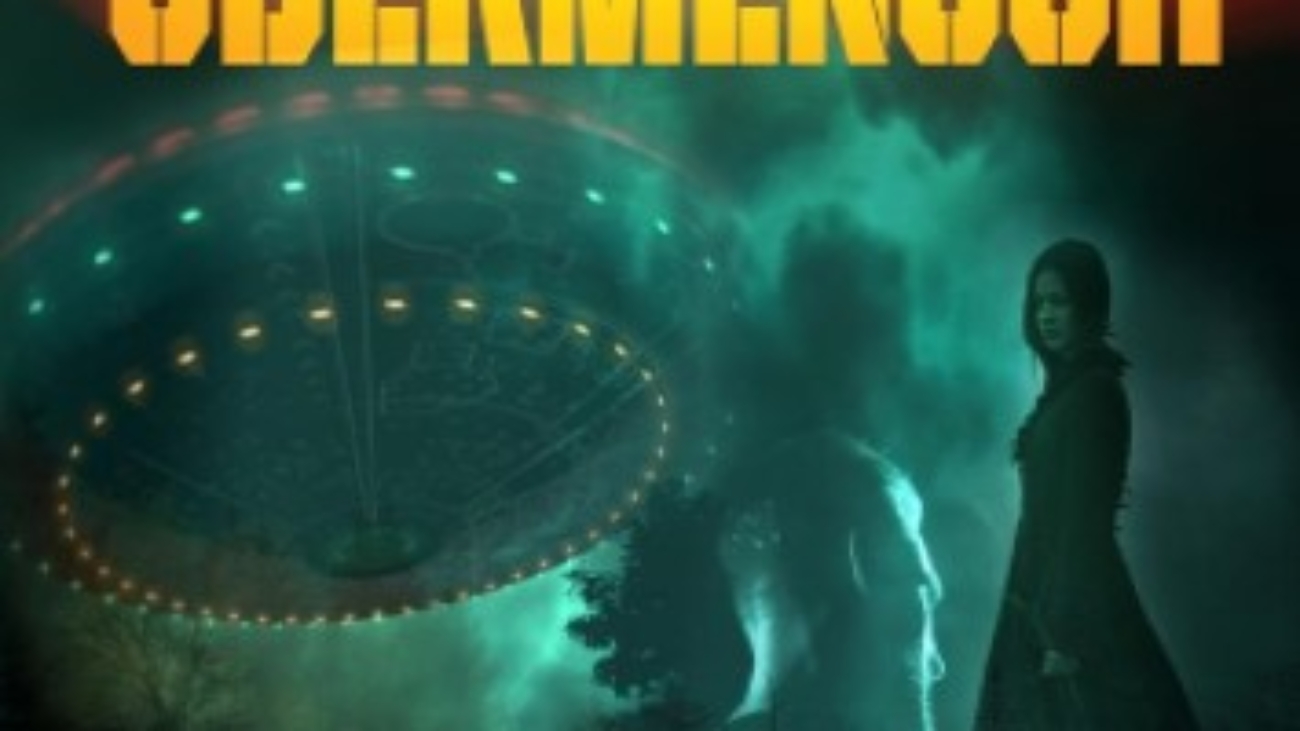
Project Ubermensch

Project Übermensch

Reviewed by Reyan Mishra

Even the bibliophiles with the highest book-count would agree the most satisfying books are the ones that leave you wanting more. The thriller in question belongs to that very club. “Project Übermensch” is an intriguing sci-fi thriller that’s stitched on an intricate web of ambitions, deception, terror, and resilience.  Purchase Here.

In 1943, experiments carried out by the U.S. Navy rendered the USS Eldridge deadly. Sailors are losing lives, and a lot that’s happening around seems inexplicable. Following a frightening accident, Third Officer Peter Smithwick deserts the army to live elsewhere under a new name.
In 2024, over seven decades later, in the picturesque town of Kleary Creek, a mysterious, spiritual man by the name of Geoffrey Cannon enjoys a cult-like following. He is a healer who according to his devotees has been blessed with divine powers, Geoffrey magically saves the life of his neighbor, Orvin Littney who suffered a massive heart attack.

However, Geoffrey’s spotless mystical image doesn’t last long as Kleary Creek residents including his devotees start turning up dead – each murdered in a gruesome manner. A number of theories emerge to explain the murders, however, Orvin believes Geoffrey might have a role to play in all that’s happening. But what’s the reality? Is Geoffrey really the puppeteer of death or is he himself a victim of some deadly force that’s beyond his understanding?

The matter-of-the-fact way Busch constructs this fiction sparks a sense of vigilance in readers. You are going to want to be on your toes even days after finishing the book. Additionally, the tale introduces you to a complex set of characters – and the character development that you witness throughout the story is truly incredible. You can’t guess the true motives of some of the characters until the end.

What’s more, the author very beautifully emphasizes both the actions and the emotions. That’s interesting to see as thrillers generally lay focus merely on the incidents instead of the emotions stirred by those incidents. Thanks to Busch’s fabulous craftwork with words, you become a part of the story as you begin imagining yourself in the shoes of the characters.

If you are on the lookout for a satisfying sci-fi thriller that keeps you on the edge of your reading chair, “Project Übermensch” is a book you must not miss. With deep characters, terrifying events, and an untrustworthy setting, the book creates the perfect hair-raising atmosphere for the readers. All in all, you are in for an intriguing read that you can’t help discussing with your amigos.

Third Place: Science Fiction
All Hope of Becoming Human

All Hope of Becoming Human by Lonnie Busch

Book Reviewed by Rahul Gaur

When Ben Jonson first came up with the saying “Curiosity killed the cat,” he probably didn’t imagine that it would continue to be used to describe humans for a long time. We’ve seen this idea in many movies, books, and this story is no different. But what makes it interesting is how he presents this theme in a captivating way.  Purchase Here.

The opening chapter sets a chilling tone as Officer Reggie’s peaceful surroundings clash with the horrifying reality he uncovers. The vivid descriptions and palpable tension create a sense of unease that permeates the entire story. I must say that the opening chapter serves as a fantastic hook for the reader, just like an exciting thriller movie.

As the plot progresses, we are introduced to a diverse cast of characters, each with their motivations and struggles. From Professor Braden’s archaeological expedition to Karen and Lizzy’s fight for survival, the chapters seamlessly intertwine, propelling the narrative forward while leaving breadcrumbs of intrigue along the way. The characters are well-developed. I felt like I got to know them and understand their motivations. The characters’ individual experiences, struggles, and encounters with the extraordinary events happening around them add depth and complexity to the narrative. Each character brings their perspectives, motivations, and reactions, shaping the overall dynamics of the story.

One thing that deserves attention is the pacing of the story. In some places, it felt like the story was moving too quickly, and I didn’t have enough time to get to know the characters or understand what was happening. Some part of the story felt like it was dragging on, and I was eager to get to the next part. However, the plot effectively grabs hold of the reader, generating a sense of intrigue and leaving them excited to uncover the unfolding narrative.

The author skillfully blends elements of horror, suspense, and the supernatural, crafting a gripping tale that defies traditional genre boundaries. The characters and their world are in a state of constant dissonance, which mirrors the unease that permeates the story. It is a testament to the author’s storytelling prowess that even in the most dreamlike moments, a sense of realism summons the reader into the story.

This story stands out by compelling readers to contemplate the duality of humanity and the decisions we make when confronted with extraordinary situations. Given that people continue to live as they do now, the events depicted in this book may come true one day. Some may call my perspective pessimistic, but I see pervasive chaos all around, which makes me wonder when we will develop the ability to coexist harmoniously with nature. What price must we pay to rediscover our humanity? Is there any hope for our collective return to a more humane state, or have we lost that opportunity entirely? The answer lies in the latter portion of the idiom, “but satisfaction brought it back.”

View the Trailer for All Hope of Becoming Human

All Hope of Becoming Human_26 second trailer from Lonnie Busch on Vimeo.